Photographer MonikaMurren took two portraits of a kitten named Sylvester and described him in both as a “Blue mink ragdoll”. In the front view, his ears and the bridge of his nose are tinged with grey, while his chest is almost cream. In the other, he is lying down with his front paws stretched out, and the grey at their tips is easier to see. Look up mink in the breed standard used by The International Cat Association (TICA) today and you will find it under Cherubim. The standard allows for mink kittens whose colour has yet to develop fully and for older cats whose body colour has deepened. The name on Sylvester’s photographs helps explain how a cat with this colouring came to be described as a Ragdoll.[1–4]
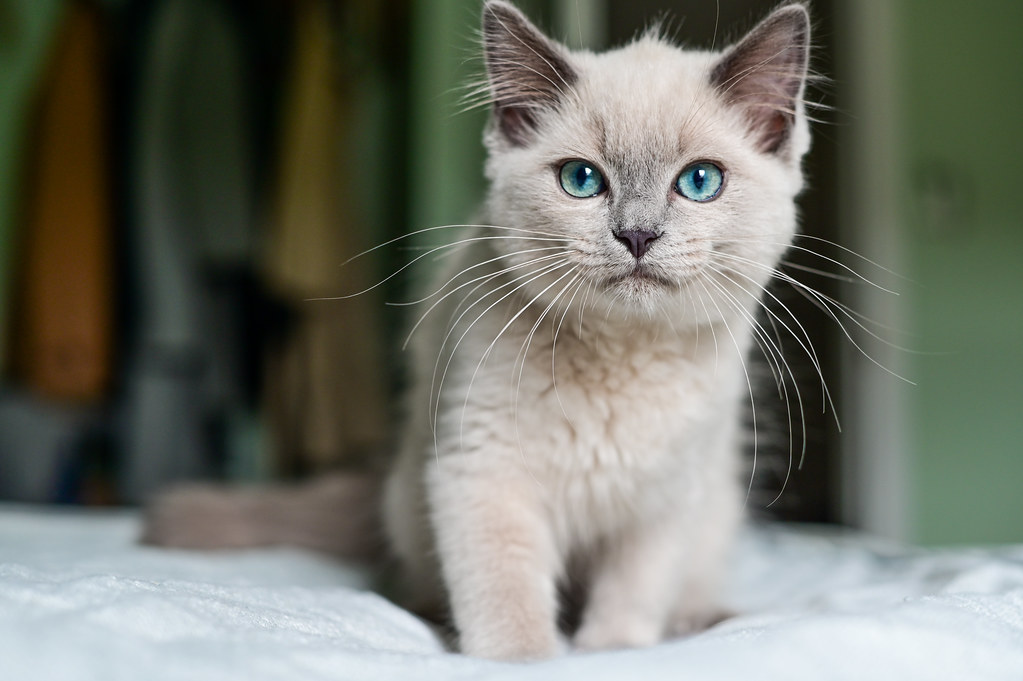
Sylvester’s facial colouring as a kitten. MonikaMurren, Flickr[1]
Where did the name “mink Ragdoll” come from?
Ann Baker developed the Ragdoll in California in the 1960s. Her early breeding programme focused on blue-eyed cats with pointed coats, though she also developed lines in other colours. According to the historical account in a proposal submitted to TICA’s spring 2024 meeting, the word Cherubim had already appeared on registration certificates issued by Baker’s own association. When early records were transferred to TICA, cats of different colours were registered together as Ragdolls. That history explains why a mink cat can carry the Ragdoll name in an old photograph or breeding record.[4,5]
A practical question about showing the cats prompted the proposed change. Under TICA’s Ragdoll standard at the time, blue-eyed pointed cats could compete for championship titles. Cats in the colours breeders called mink, sepia and solid were ineligible for that class. The 2024 proposal called for a breed group that would give cats in those colours a breed name of their own. In the standard effective 1 May 2025, the Ragdoll (RD) and the Cherubim (CB) are two distinct breeds within the Ragdoll Breed Group. They share a description of head shape and body structure. The main distinctions are coat colour category and the eye colours that go with it.[3,4,6]
The association’s name matters when reading a breed description. The Cat Fanciers’ Association (CFA) specifies a blue-eyed, pointed Ragdoll, with the face, ears, legs and tail darker than the torso. That is the familiar appearance described in our article on the Ragdoll’s origins, temperament and health risks. When bringing a cat home, read the issuing association’s name together with the breed and colour entries on its papers. The photographer’s description tells us what Sylvester was called at the time. His own papers would establish how he was registered.[3–5,7]
How the paws compare with the body
To see what mink means, look at the torso and paws together. TICA describes a mink cat as having a moderately coloured body with a visible contrast between the torso and the darker extremities. Eye colour can range from blue to green. In a sepia cat, the body colour is closer to that of the extremities, so the contrast is subtler. The eyes can be gold, green-gold or green. The formal standard calls the third category traditional. Within that category, a solid coat should be even in colour. This distinction helps when matching a breeder’s use of solid in an older record to the categories in the current standard.[3,4]
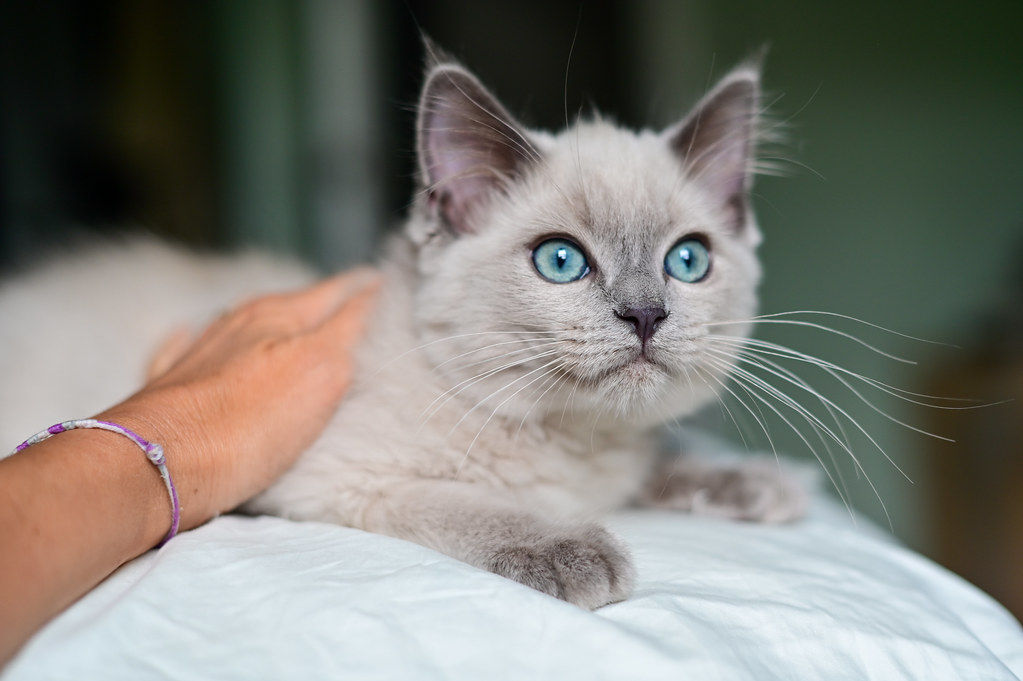
Mink contrast on Sylvester’s front paws. MonikaMurren, Flickr[2]
If you want to follow a kitten’s colour as it grows, take an occasional photograph beside the same window, with an ear, a flank and a front paw in the frame. Looking back, it is easier to tell whether the whole picture looks darker or the contrast between the flank and paw has changed. The standard allows for gradual colour development in both mink and sepia cats, with a lighter coat in kittens and a deeper body colour in older cats. When caring for that semi-long coat, two observations are more useful day to day: where the comb catches and how long the cat is comfortable being groomed.[3,8]
Room for a slow-growing cat
The Cherubim has a broad chest and a long body. Its semi-long outer coat falls along the body over relatively little undercoat. A Cherubim can take three or four years to reach its adult size, so it is worth revisiting the fit of a bed that once held a curled-up kitten. When choosing a window perch or a cat tree, consider whether the adult cat will have space to stretch out, turn around and climb down securely. A long coat can hide the waist. As the cat gains weight, ask your veterinarian to show you how to feel along the ribs and backbone to assess body condition. That makes it easier to distinguish a growing frame from accumulating fat.[3,6]
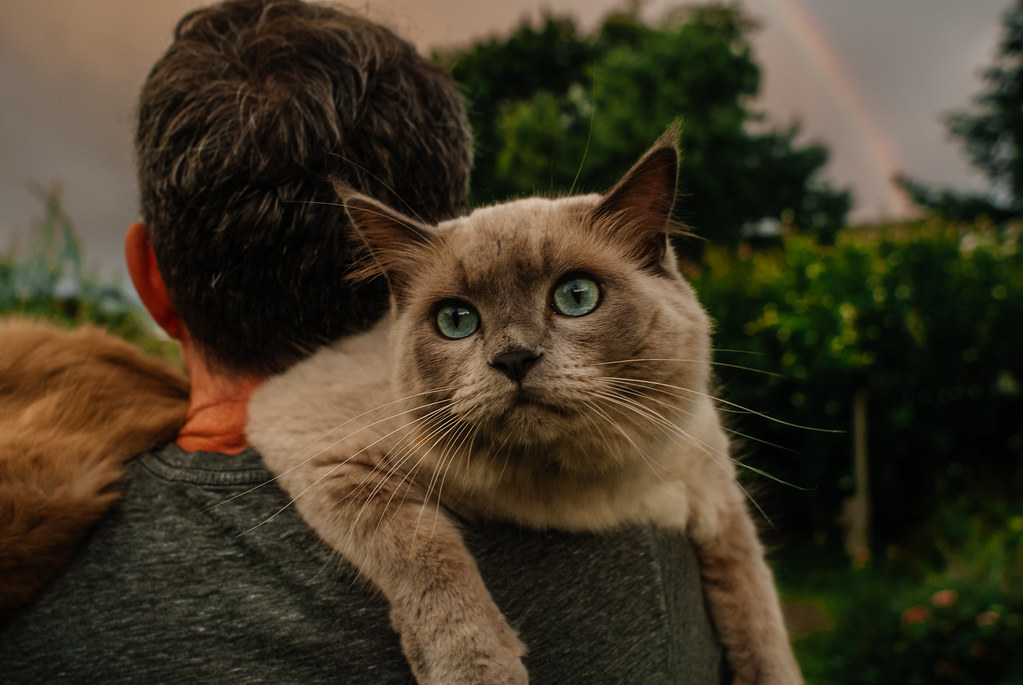
Sylvester’s ruff and forelegs. MonikaMurren, Flickr[11]
TICA describes Cherubim as generally sociable, calm and playful. Sylvester rests across someone’s shoulder in the photograph. Your cat may prefer a spot beside you. Put a favourite bed near the family and leave a quiet hiding place available for time alone. Let the cat approach, offer a few strokes, then pause to see whether it leans back in. The same rhythm works for grooming. The cat can learn how a session begins and has room to walk away when it has had enough.[6,8,11]
To draw a quiet cat into play, trail a wand toy where the cat can see it, then pause beside a cardboard box. Give the cat time to crouch, creep closer and pounce. After play, it should have a clear route back to a resting place. In a home with several cats, walk that route yourself. If one cat lies in the doorway, can the other still reach water, food and a litter tray? Spreading those resources across different locations gives each cat more choice than another bowl in the same corner. The Feline Veterinary Medical Association identifies safe retreats, separate resources, opportunities for hunting-style play and predictable interaction with people as needs of indoor cats.[6,8]
What does a Ragdoll heart screening report tell you?
If a kitten comes with a report labelled “Ragdoll HCM”, first look for the identity of the cat tested and the name of the test. The UC Davis Veterinary Genetics Laboratory test looks for the R820W variant in the MYBPC3 gene. An N/N result means the laboratory found no copies of that variant in the tested cat. One copy and two copies carry different implications. In the Ragdoll data described by the laboratory, two copies are associated with a higher risk of severe hypertrophic cardiomyopathy (HCM). If the report belongs to a parent, record which parent was tested and keep the result under that cat’s name.[9]
The DNA test answers a question about inheritance. To find out whether an individual cat’s heart muscle has thickened, a veterinarian considers the family history and physical examination and, when indicated, assesses the heart with an echocardiogram. If a close relative has a confirmed diagnosis or a veterinarian hears a heart murmur, bring the original reports and identify how the cats are related. Those details convey more than saying the cat has had “heart screening”. The Ragdoll variant data do not give a Cherubim’s probability of developing HCM. A mink coat offers a clue to the breed’s history. The individual cat’s heart health is a question for its own clinical record.[9,10]
References
-
[1] MonikaMurren. Sylvester. Flickr.
-
[2] MonikaMurren. Sylvester. Flickr.
-
[3] TICA. Ragdoll Breed Group (RD/CB). Effective 1 May 2025.
-
[4] TICA Board of Directors. Spring Meeting Agenda. May 2024, pp. 19–20.
-
[5] The Cat Fanciers’ Association. Ragdoll.
-
[6] TICA. Cherubim.
-
[7] 小猪萌宠. Daily Cat archive. Entry for “布偶猫的来历、性格与健康风险” (The Ragdoll’s origins, temperament and health risks).
-
[8] Feline Veterinary Medical Association. New Feline Veterinary Medical Association Position Statement Reimagines Life for Indoor Cats. 28 August 2025.
-
[9] UC Davis Veterinary Genetics Laboratory. Hypertrophic Cardiomyopathy (HCM) in Ragdolls.
-
[10] Luis Fuentes V et al. ACVIM consensus statement guidelines for the classification, diagnosis, and management of cardiomyopathies in cats. 2020.
-
[11] MonikaMurren. Sylvester. Flickr.