In Córdoba, Argentina, a hunting dog had to pick up a wild boar’s scent and follow it over long distances with the rest of the pack. In 1928, Antonio Nores Martínez drew up a breed standard for the dog he had developed, the Dogo Argentino. Dogos went on to hunt large game, including wild boar and pumas, in packs. The work called for strength, stamina and the agility to change direction in a stride. That history raises a practical question on a walk today. When something darts across the path, can you get the dog to glance back at you before it takes off? [1]
Seen from the side, a Dogo’s body is slightly longer than the dog is tall at the shoulder. Look at the dog standing on the grass below. Its front legs are straight, its chest is deep, and the muscles of its thighs show through the short white coat. Follow the line of the back toward the broad head and you can see how the sturdy neck supports it. Those proportions help you recognize a Dogo. A small dark patch near one eye also fits the American Kennel Club (AKC) description. [1]
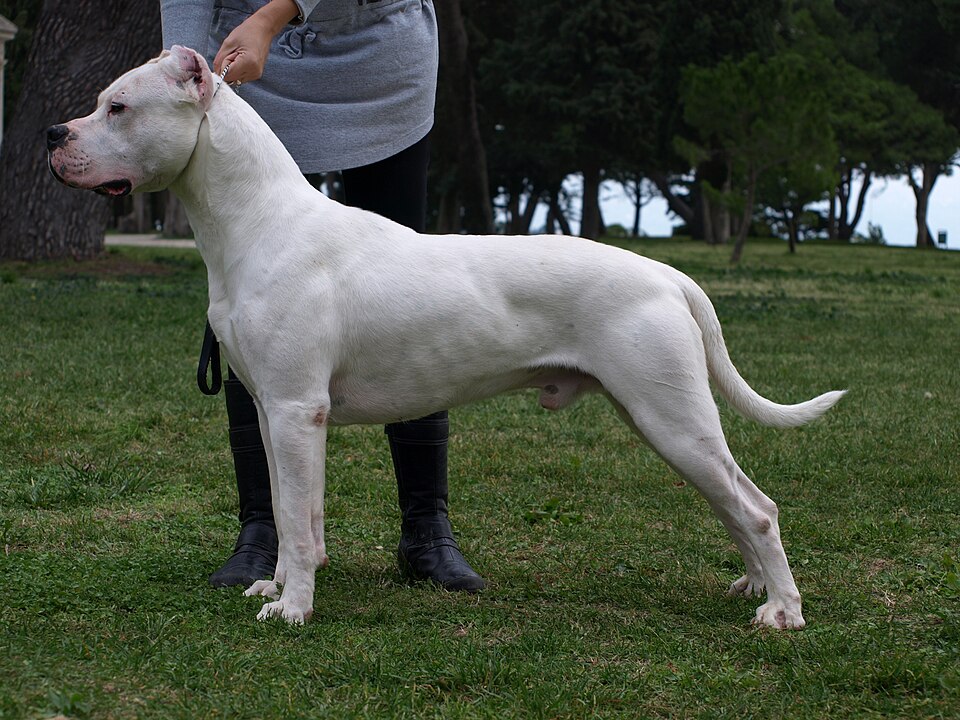
A side view shows the Dogo’s build. joseltr, Wikimedia Commons[5]

Give your Dogo a chance to use its nose
To see how a Dogo might fit into your household, plan an ordinary workday. The AKC suggests several walks a day, play in a fenced yard and indoor games such as hide-and-seek. [1] On the morning walk, choose a route where you can see well ahead and leave time for the dog to sniff along a grassy verge. In the evening, when someone can give the dog their full attention, find a quiet spot to practice walking together and turning together. If the only outing on the family calendar is a weekend hike, work out who can take the weekday walks, especially who can keep a steady hold on the leash if the dog suddenly gains speed.
One yard can offer several games. Close the gate and have one person wait with the dog while another hides somewhere easy to find. Let the dog search. When it finds the person, walk back to the starting point together and choose a new hiding place for the next round. On a rainy day, a hallway and two adjoining rooms will do. Finding someone gives the dog a reason to follow a scent and a clear end to the search. If your Dogo enjoys chasing a ball, roll one for it to fetch inside the fence. When you put the ball away, leave time for a sniff around. Let the dog’s interest guide your choice of game, and notice how readily it can walk away with you after a round. [1]
Reward the glance back
A Dogo’s interest in chasing prey makes “watch me” a useful cue to teach early. Start in a quiet living room. Hold a small treat near the dog’s nose and slowly bring it up between your eyebrows. The moment the dog looks at your face, say “yes” and give it the treat. Once the movement is familiar, make the same gesture with an empty hand and reward from your other hand. When the dog recognizes the gesture, say “watch me” just before you move your hand. Everyone at home can use the same words and gesture, giving the dog a chance to turn toward you as soon as it hears the cue. [1][2]
Outdoors, keep the leash on and start far enough away that your Dogo can notice movement and still turn toward you. If it sees someone walking in the distance and glances back on its own, reward that glance as it happens, then walk on together. If the dog fixes its gaze ahead, leans forward and doesn’t turn when you call, give it more distance. Next time, practice from farther away, just as the dog notices the movement. Progress can be as small as a single glance. Yesterday you needed a hand signal on this stretch of path. Today the dog looked up on its own. That’s the moment to reward. [2]
Before you bring a Dogo home, have the person who will usually hold the leash walk the route. Does the building door open straight onto traffic? Where could you turn off the path if another dog was coming? If you live with a cat or other small animals, who will hold the dog when people come and go, and which rooms can you keep separate? Hunting alongside other dogs is one situation. Seeing a small animal run through the house is another. Having doors, fences and a leash in place gives you room to practice at a distance where your dog can succeed. [1][2]
Check the paws at brushing time
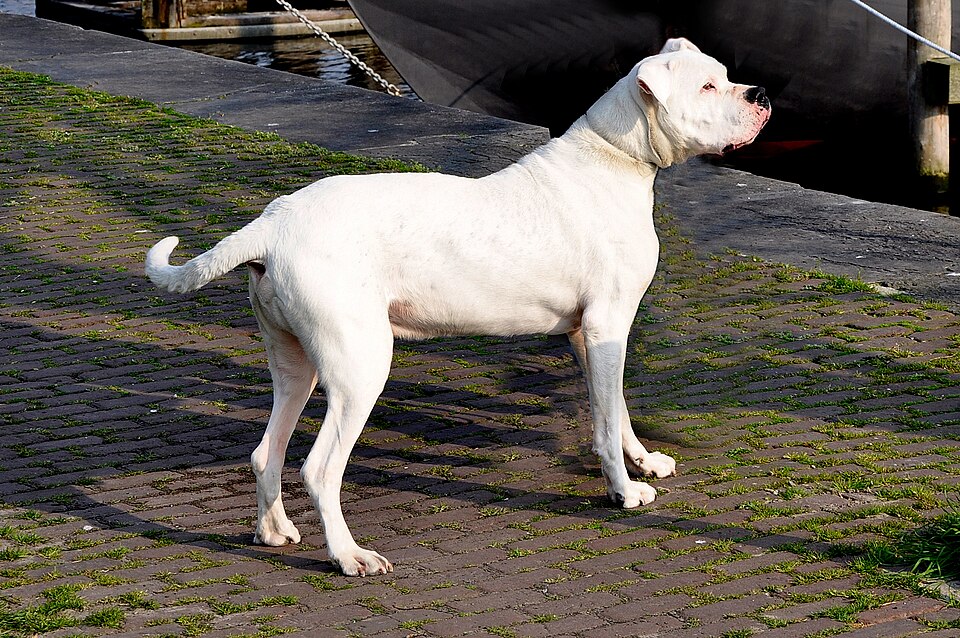
The Dogo has a short white coat. Paul Hermans, Wikimedia Commons[6]

On the dog standing on the brick paving, the hair lies flat from the shoulders to the flanks. The AKC recommends weekly brushing and a bath as needed. The paws are easier to overlook. A Dogo’s strong nails grow quickly and can split if they get too long. After brushing the coat, check the nails on each paw. Trim or grind them regularly as they grow. Gently lift each ear flap to look for a buildup of wax or debris. Practice these steps one at a time so the dog gets used to having an ear touched or a paw held. Make time for regular toothbrushing, too. [1]
Ask for a hearing result for each ear
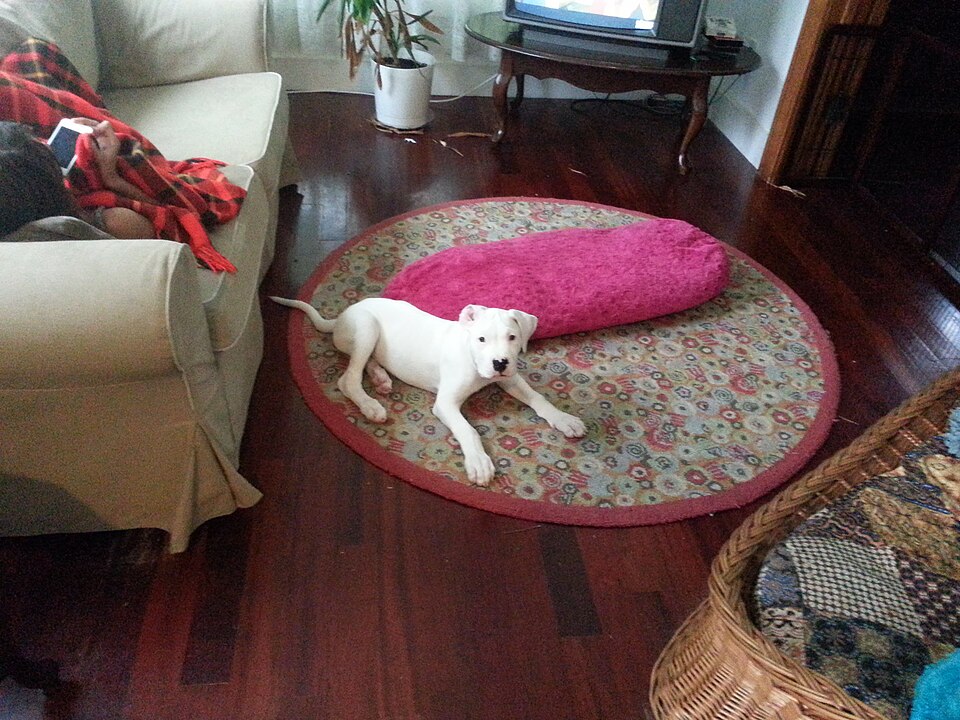
Saki is a Dogo Argentino puppy. BethGuay, Wikimedia Commons[7]

Before you start teaching a puppy to respond to your voice, find out what it can hear. In its health statement, the Dogo Argentino Club of America requires breeders to have their breeding dogs and the puppies in every litter undergo a brainstem auditory evoked response (BAER) test. During the test, each ear receives a series of clicks, and the equipment records the response from each side separately. A puppy that hears in just one ear may still turn when you speak or clap behind it. The puppy’s own report answers the question a clap leaves open. What response did the test record for the left ear, and what did it record for the right? [3][4]
When you talk with the breeder, start with the hearing report for the particular puppy you plan to bring home and go over the result for each ear. Then ask for the parents’ hip screening and cardiac examination records. The breed club recommends both checks for breeding dogs. [3] If a veterinarian confirms hearing loss, build hand signals the dog can easily see into the family’s daily practice. When a strong dog spots something moving on a walk, that glance back matters. Knowing which cues your dog can pick up helps you teach it. [1][2][4]
References
-
American Kennel Club. Dogo Argentino.
-
American Kennel Club. Grab & Hold Your Dog’s Attention With the “Watch Me” Command.
-
Dogo Argentino Club of America. Parent Club Health Statement. November 3, 2020.
-
Louisiana State University. What is the BAER test?.
-
joseltr. File:0Dogo-argentino-22122251920.jpg.
-
Paul Hermans. File:Dogo Argentino -Argentijnse dog 14-04-2010 17-00-50.jpg.
-
BethGuay. File:Saki-posing.jpg.