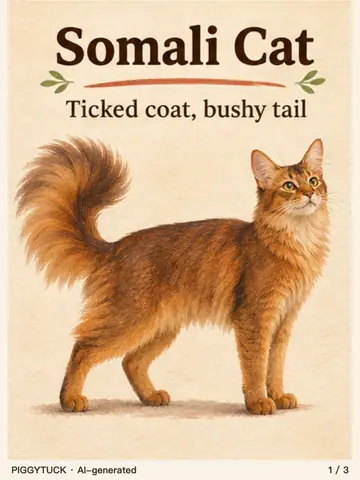
Anyone considering life with a Somali should first see its kinship with the Abyssinian and its semi-long coat, then prepare climbing space and company for an active cat, and put combing, dental care, and genetic-screening conversations on the daily list. Semi-long hair does not automatically mean a high-maintenance show coat, and activity does not mean the cat can spend all day alone. Turning association and veterinary descriptions of breed tendencies into concrete space, interaction, and veterinary plans matters more than fox-tail photos alone.
What the semi-longhaired cousin looks like
The Somali is the semi-longhaired relative of the Abyssinian: both share a ticked coat and body frame, but the Somali adds a softer medium-length coat, ear tufts, and a fox-like brushy tail, and is registered as its own breed.[1][2] The name comes from Somalia, which borders Ethiopia (formerly Abyssinia); it does not mean the breed originated in Somalia.[1][3] How the longhair gene entered Abyssinian populations lacks a complete documentary chain; after the mid-twentieth century, longhaired cats were named Somalis and gradually gained show registration and championship status.[2] That history helps avoid casting a “semi-long Abyssinian” as an unrelated wild species or inventing a geographic origin from the name alone. When buying or adopting, verify photos, pedigree, and health talk through association-recognized breeders or rescue channels—not by fluffiness of the tail alone.
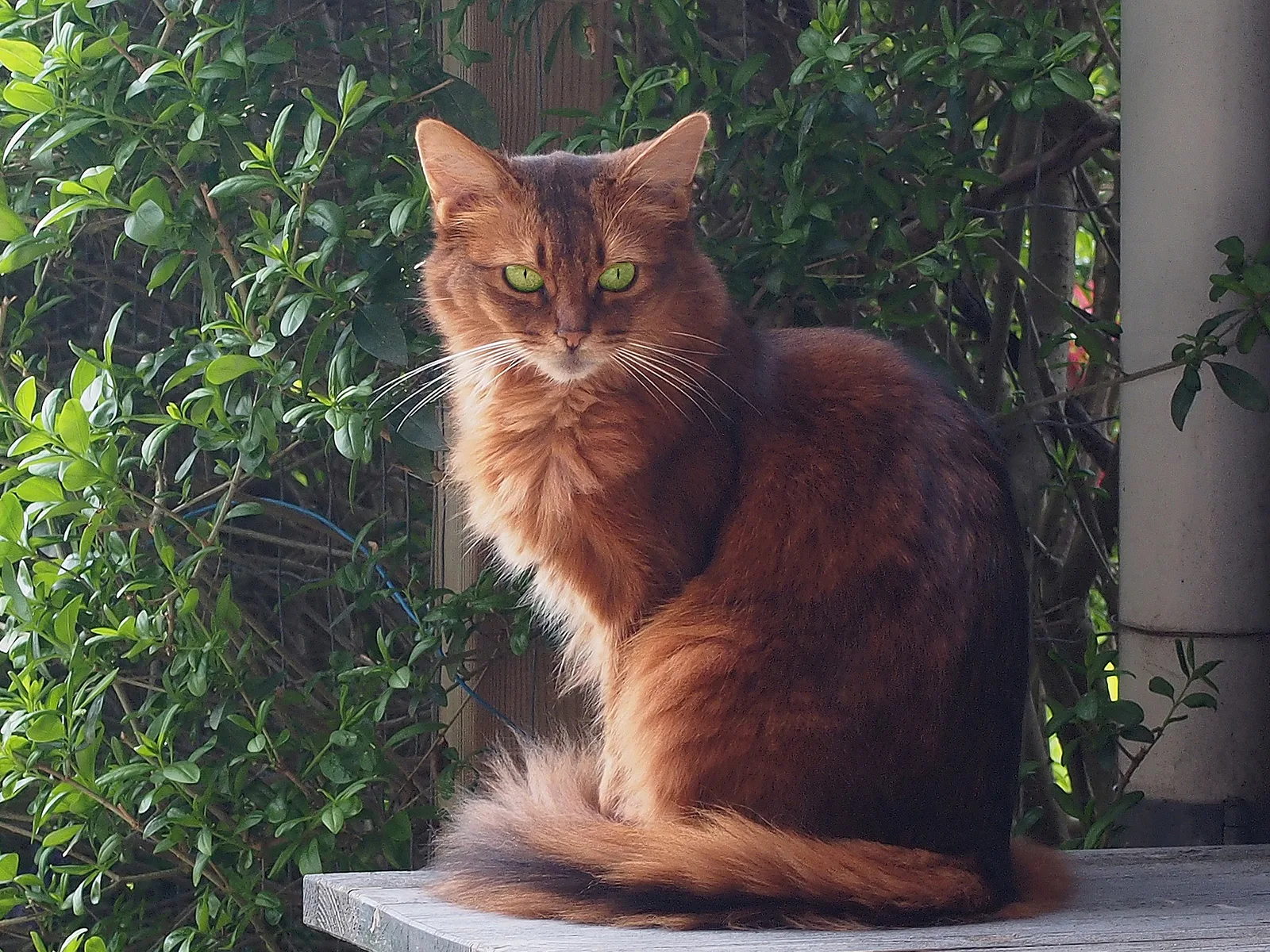
Figure: Ruddy Somali sitting on a platform. Finn Frode Hansen, Wikimedia Commons

Ideal examples look medium, solid, and agile: queens about six to eight pounds, males about eight to ten; a medium-long body, fine strong legs, oval feet, and a often tiptoe stance.[1][2] The head is a modified wedge with softened contours, large forward-tilted ears, and almond eyes in gold, copper, or green with a dark rim.[1] The coat feels fine and soft; it may be slightly shorter on the shoulders, longer in the ruff, belly, and hind “breeches,” and longest on the tail, which is thick at the root and slightly tapered into a full brush.[2] Main colors are Ruddy, Cinnamon, Blue, and Fawn; associations also record chocolate, lilac, and silver counterparts. Each hair has multiple bands and can look translucent in motion.[1][2] Day-to-day recognition can check three points together: an Abyssinian-like compact agile frame, medium rather than floor-length hair, and a tail clearly fuller than the rest of the coat. Even then, confirm with pedigree or registration, because other semi-long tabbies can look similar.
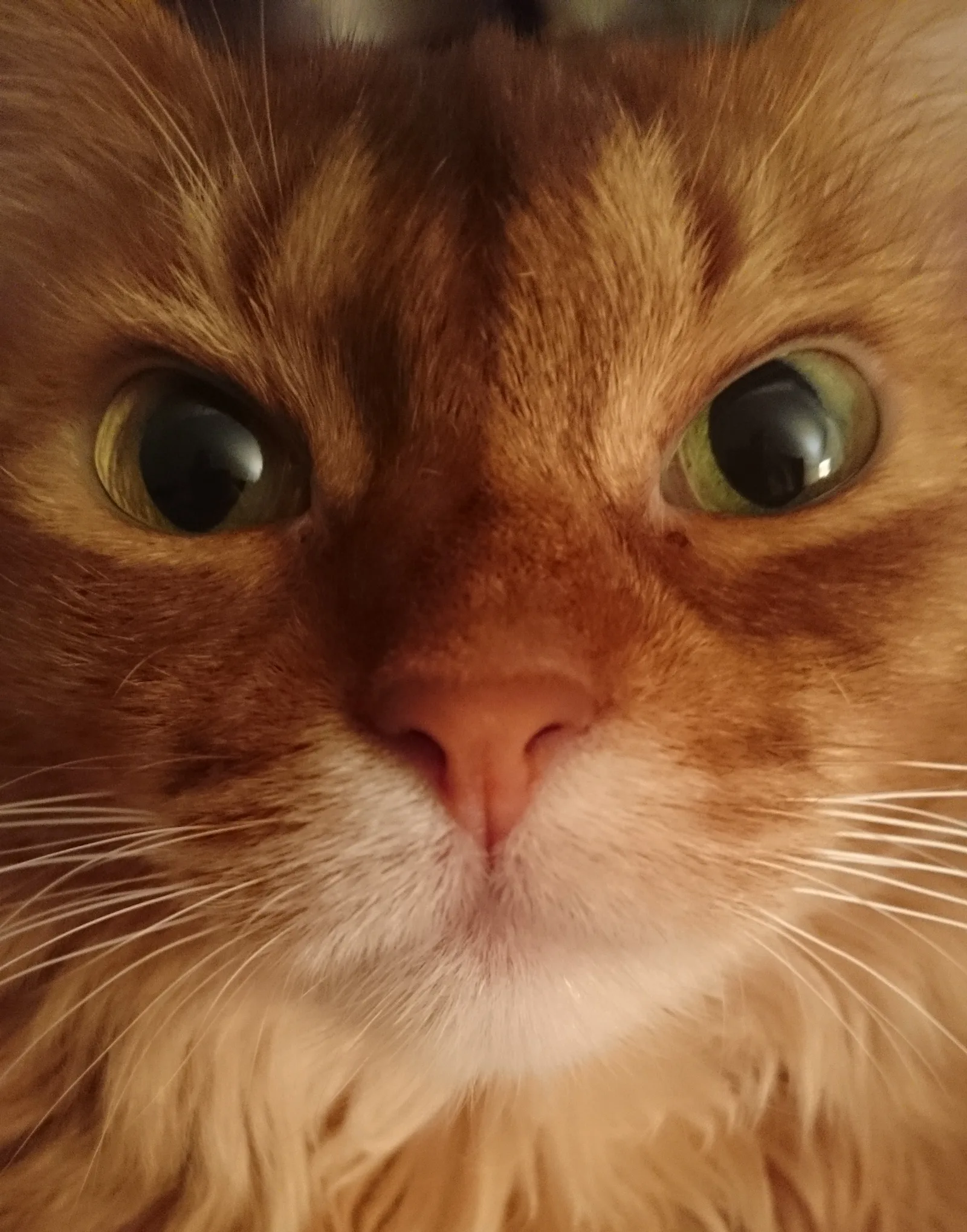
Figure: Extreme Somali face close-up. Incabell, Wikimedia Commons

What space and company an active life needs
Association and veterinary sources often describe Somalis as curious, intelligent, and highly interactive: they climb, chase toys, follow people between rooms, and watch outdoor movement closely.[1][2][3] That is not a guarantee for every cat; individuals vary widely. If the home is empty for long stretches, plan daily interaction, compatible companions, and enough climbing and enrichment rather than assuming quiet solitude all day.[1][3] “Needs company” is also not constant physical clinging: many prefer joining what you are doing or watching from a height rather than sitting on a lap all evening. Shared life should include both a safe alone environment and predictable interaction windows.
Prioritize sturdy cat trees and multi-level shelves for high vantage points; a safe window onto bird activity often holds attention.[1][3] Play should center on interactive wand sessions, with self-play toys and puzzle feeders in support; some individuals fetch and can join short positive-training games.[2][3] They usually prefer joining activity over long lap sessions; closeness may mean sitting nearby, perching on a shoulder, or soliciting attention with body language.[2][3] Intelligence brings management costs: some learn door latches or faucet interest, so stash fragile items and watch taps.[2] If other cats or dogs share the home, introduce gradually and give each animal retreat heights or hiding places—do not treat “likes interaction” as forced cohabitation. Without vertical space, active energy shifts to cabinet doors, curtains, and tabletop objects.
Grooming, dental care, and veterinary checkpoints
Semi-long hair is not automatically high maintenance: the texture is fine and seldom mats. Weekly combing removes dead hair, limits shedding, and lets you check skin and ears without the frequent professional grooming some show longhairs need.[1][2][3] Some cats collect oil along the backline and tail base and can clump; bathe as a breeder advises.[2] Trim nails about every two weeks; bathe when the coat is dirty.[1] Combing is also observation: sudden greasy clumps at the tail base or breeches, or shedding spikes outside seasonal changes, should be noted for the vet rather than answered only with more baths. Habituating combing and nail trims as a kitten makes adult fox-tail and ear-tuft care far easier.
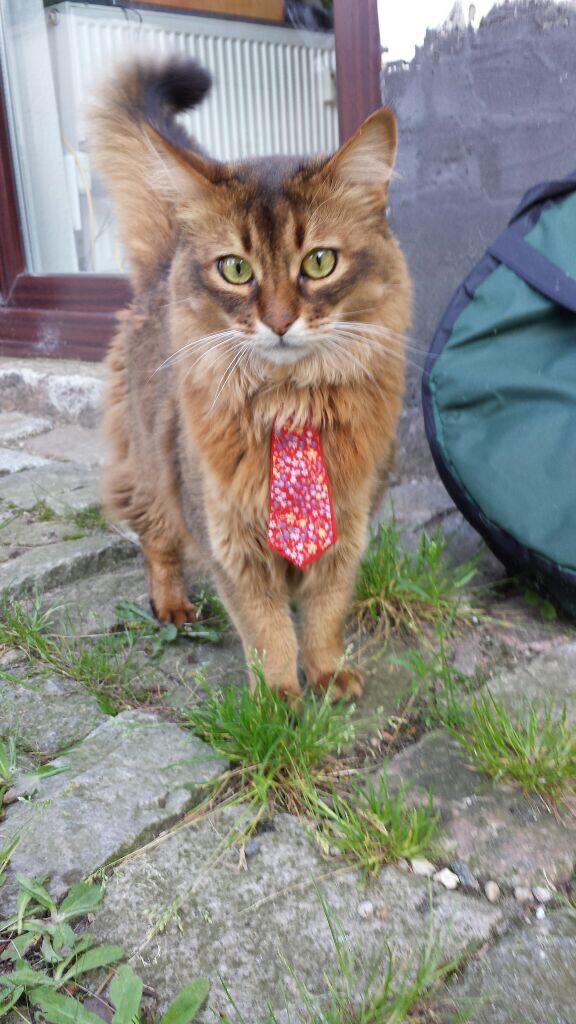
Figure: Somali standing in a red floral tie. dro167, Wikimedia Commons

The mouth is a daily focus. Some lines develop gingivitis and other periodontal disease early; start brushing with veterinary-approved toothpaste and include oral exams in routine checkups.[1][3] Breeders can DNA-screen for progressive retinal atrophy and pyruvate kinase deficiency; renal amyloidosis still depends more on line history. A carrier or family risk result is not a diagnosis and not a health guarantee.[1][2][3] Ask specifically about ophthalmic exams, relevant genetic results, and records of early dental or kidney problems, and keep written or checkable notes. On the household side: follow veterinary vaccine and parasite plans, weigh regularly and glance at the gums, and seek care promptly for appetite loss, polydipsia/polyuria, night collisions, or suspected vision changes—do not dismiss abnormalities as “just a busy breed.”
Feed a complete diet matched to life stage in meals; two meals a day are common, while free feeding can let eager eaters overeat.[1][3] Very active cats may need higher calories, adjusted with a veterinarian by weight and body condition. Place water away from food so food odor does not suppress drinking.[1] Body-condition scoring beats watching whether the bowl empties: ribs should be palpable but not sharp, with a visible waist. Extra food for high activity should not become unmeasured all-day snacks. Energy needs often fall after neutering; recheck portions with a veterinarian so a fluffy coat does not hide weight gain.
If the fox tail and ticked sheen draw you in, first confirm the household can offer climbing, play, and predictable company, then treat weekly combing, dental care, and health talk with breeders or rescue as routine. In appearance it is the Abyssinian’s semi-long relative; in daily life it is closer to an active house cat that wants to take part. Association and veterinary pages help identify the breed and group tendencies; individual temperament, health, and fit still depend on living with that cat and veterinary judgment.
References
-
[1] The International Cat Association. Somali. https://tica.org/breed/somali/
-
[2] The Cat Fanciers' Association. Somali. https://cfa.org/breed/somali/
-
[3] Kristen Seymour; reviewed by Barri J. Morrison, DVM. Somali Cat Breed Health and Care. PetMD. Updated Mar. 6, 2024. https://www.petmd.com/cat/breeds/somali