On Italian farms, the Cane Corso drove livestock, hunted wild boar and kept watch over farmyards and henhouses. Its ancestry reaches back to Roman times, but the farm offers a more familiar picture of the dog. A Corso had reason to notice a sound beyond the yard and to pay attention to the person working alongside it. Both qualities come into play at a modern front door. When footsteps approach, can someone welcome a visitor while the dog waits in its usual spot for the cue to move? [1]
Look at the seated gray Corso below. Its straight forelegs support a broad chest, and the short, stiff outer coat reveals the muscles around its shoulders. The fawn dog's profile shows the breadth of the muzzle and the upper lip hanging over the lower jaw. According to the American Kennel Club (AKC), a Corso can stand nearly 28 inches at the shoulder and often weighs more than 100 pounds. A puppy taking an excited step through an open door is easy to follow. A full-grown Corso taking that same step can pull the person holding the leash along with it. [1]
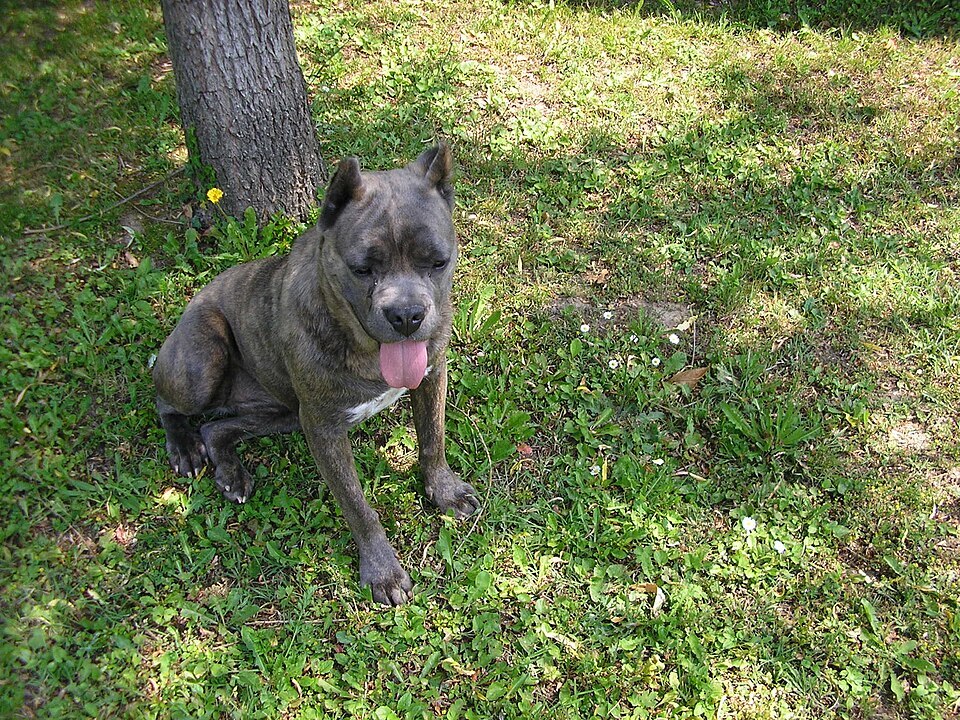
Figure: A seated Cane Corso. Eponimm, Wikimedia Commons[3]

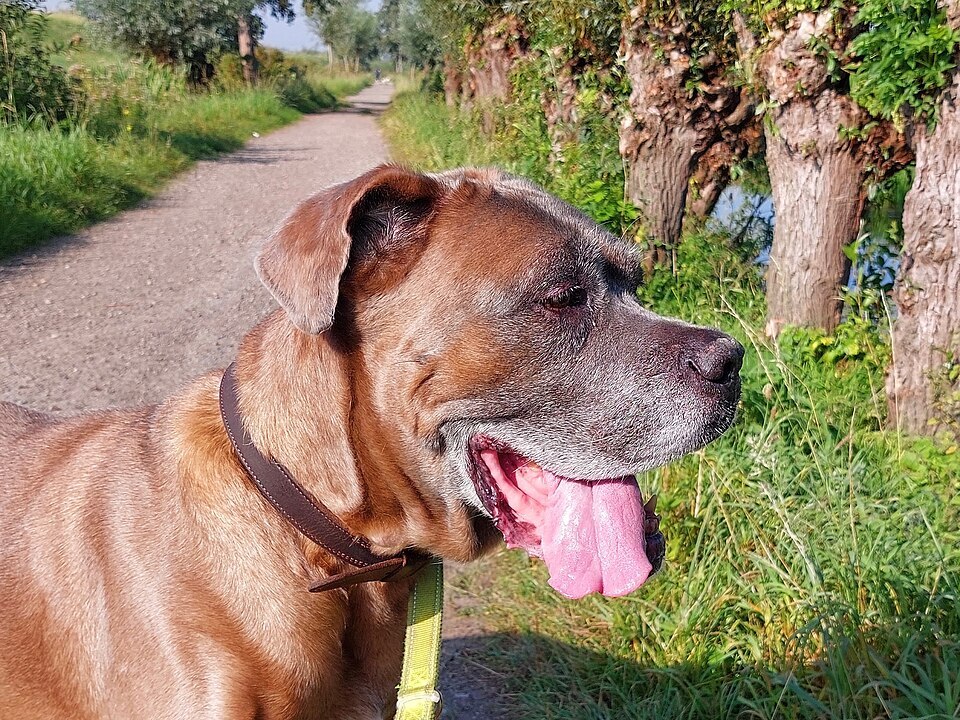
Figure: The Cane Corso's muzzle. Tjitjak70, Wikimedia Commons[4]

A Corso needs daily exercise and enjoys having a job to do. Start with a route where you can both settle into a comfortable stride. For a fit adult, that might mean a brisk walk or a longer hike, with time to sniff before you call the dog to turn and walk with you again. At home, try hiding a toy in a familiar place for the dog to find by scent. Walking together calls for attention to your pace, while searching lets the dog concentrate on a task of its own. Even with a yard, set aside time for both. [1]
Teach waiting at the door while the puppy is small and nobody is outside. Clip on the leash and stop a few steps back from the threshold. When the puppy stays beside you, reward it there. On the next try, add one movement, such as reaching for the handle. If the puppy surges forward, lower your hand and return to the spot where it could wait comfortably. Once touching the handle is an ordinary event, try opening the door a crack. Give a clear release cue and step through together. Use the same cue whoever takes the puppy out. [1]
Outside, choose a quiet stretch of path and walk forward while the leash hangs slack. When the puppy slows with you, follows a turn or glances up at you, offer a reward at your side. Where you deliver it matters. If the puppy has to dart ahead to reach your hand, that is the step it gets to practice. Once walking together feels easy there, try a route with a little more foot traffic. Corsos tend to be willing learners with minds of their own. Puppyhood gives you time to establish cues you can both rely on as the dog grows stronger. [1]
That same walk offers a chance for early socialization. Choose a place with room to move away as people or dogs pass. When the puppy looks at a passerby and then turns back to you, reward that moment. If its gaze stays fixed and the leash draws tight, move farther away and let it watch from there. Passing someone calmly is a complete exercise in itself. A reward-based puppy class can also help family members learn to recognize when the puppy is ready to respond and when a little more space would help. [1]
Picture an ordinary workday in your household. Who takes the morning walk and can pause in a shared hallway while a neighbor passes? Who has time to go out with the dog in the evening? When guests carry bags through the door, is there a comfortable spot where the dog can settle clear of their path? Family members can share these jobs if everyone who handles the dog knows the routine. If only one person can comfortably walk the adult Corso, work out who can take over when that person is ill or working late. [1]
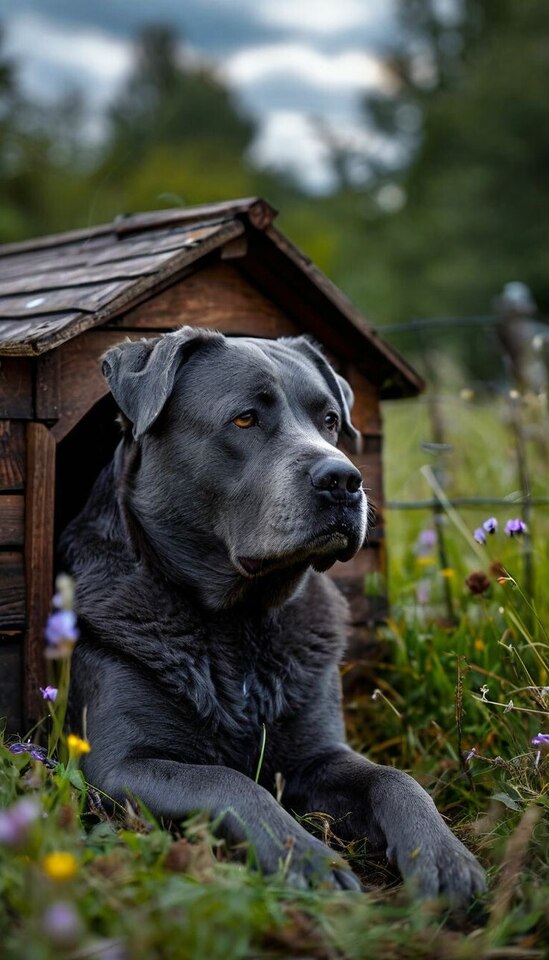
Figure: The coat on the head and neck. Waledyousef, Wikimedia Commons[5]

Beneath the close outer coat visible on the head and neck lies an undercoat whose length varies with the climate. Corsos shed year-round, especially in spring. A weekly brushing with a medium-bristle brush or rubber grooming mitt lifts out loose hair and dirt. Brush daily during heavy shedding. Grooming is also a good time to check the ears and nails. Overlong nails can make walking and running painful, so trim them regularly. Brush the teeth often with dog toothpaste. Gentle handling in puppyhood gives the dog time to grow comfortable with someone touching its ears, mouth and paws. [1]
Before bringing a puppy home, ask the breeder what hip evaluations each parent had and what their eye examinations showed. Hip dysplasia and eyelid abnormalities are among the breed's health concerns. The parents' records tell you which risks the breeder considered. Your veterinarian can assess your own dog's health as it grows. Choose outings that suit its age, condition and ease of movement. Count training treats toward its daily food intake and follow changes in its weight. The impressive size of an adult Corso is a poor target for feeding a growing puppy. [1]
Find an emergency veterinary hospital before you need one, and plan how you would get a large dog there. Deep-chested Corsos are susceptible to bloat, in which the stomach expands and may twist. Repeated attempts to vomit with nothing coming up warrant an immediate call to the emergency hospital and a trip there. Other signs can include restlessness, drooling and a swollen abdomen. From teaching a puppy to wait at the door to getting an adult dog into the car in an emergency, the best guide to family fit is whether your household can meet those needs in practice. [1][2]
References
-
[1] American Kennel Club. Cane Corso Dog Breed Information.
-
[2] American College of Veterinary Surgeons. Gastric Dilatation-Volvulus.