If your picture of a Chinese Shar-Pei is a puppy covered in wrinkles, you might walk straight past an adult. The American Kennel Club (AKC) breed standard describes loose skin across a puppy’s head, neck and body. By adulthood, the obvious folds may be confined to the head, neck and the ridge between the shoulders. Step back and look at the standing dog in profile. This medium-sized farm dog from southern China, once used to hunt, herd and guard livestock, has a broad, deep chest and a short, strong back. Its height at the shoulder roughly matches its length from breastbone to rump, giving it a nearly square outline. [1][2]
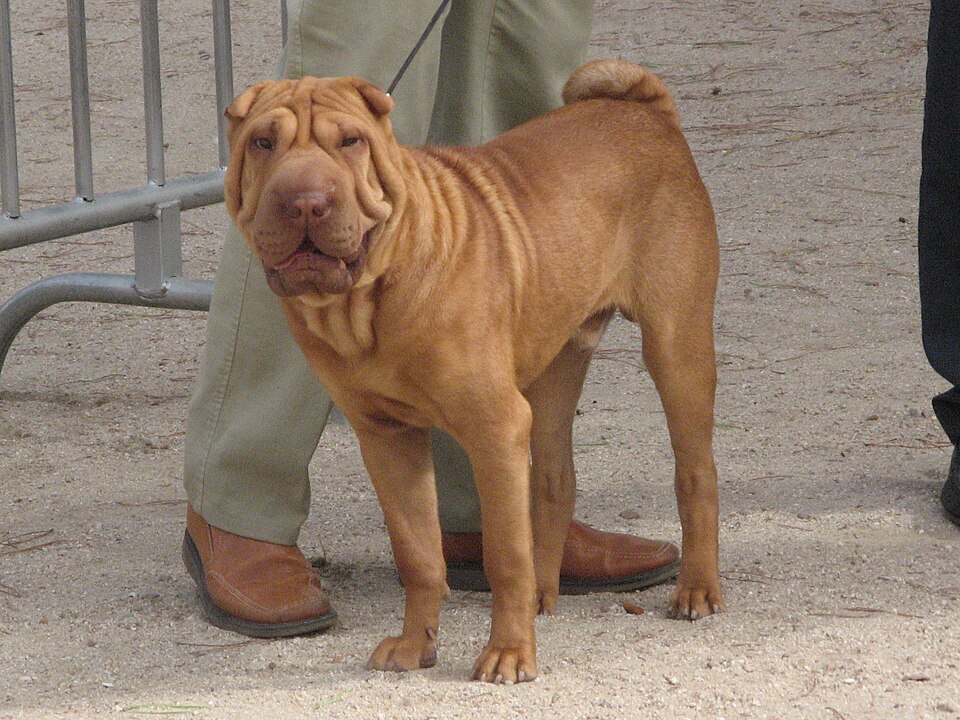
Figure: A Shar-Pei in profile. M.Peinado, Wikimedia Commons[5]

The tail sits high and tapers from a thick base, curving over the back or to one side. At the other end, the muzzle stays broad and full all the way to the nose, hence the familiar comparison to a hippopotamus. Tiny triangular ears lie close to the head, their tips pointing toward the eyes. Folds frame the cheeks, and the small, deep-set eyes can give even a relaxed dog a frown. Together, the muzzle, ears, build and tail make an adult Shar-Pei easy to recognize. When meeting a prospective companion, pay particular attention to how comfortably it opens both eyes. Counting forehead wrinkles tells you little about that. [1][2]
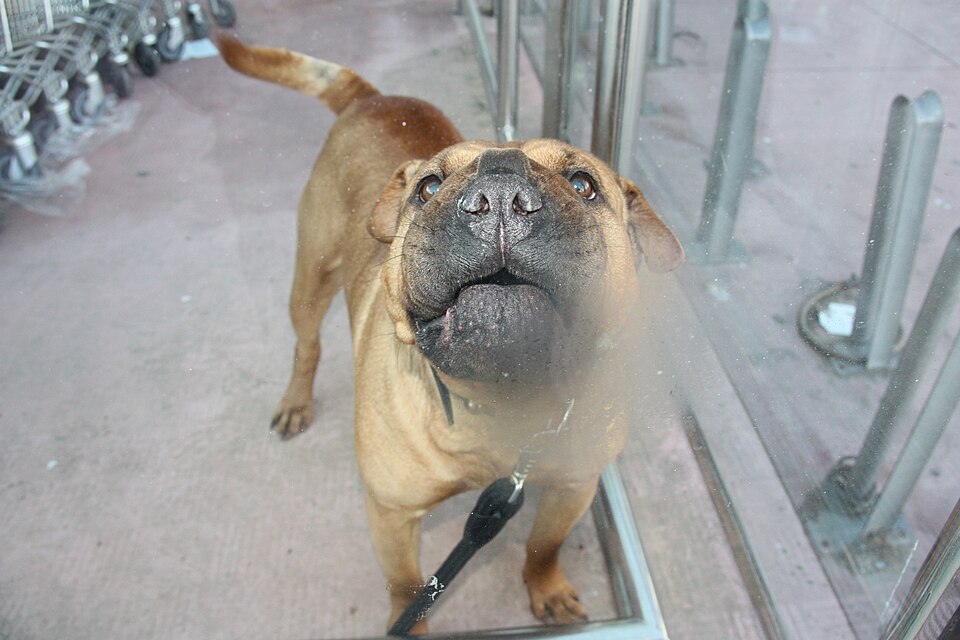
Figure: The Shar-Pei’s broad muzzle and small ears. Daiima, Wikimedia Commons[6]

Who would take the dog out on an ordinary workday? Exercise needs vary. Some Shar-Pei enjoy a long outing with a keen walker, while others do well in an apartment with several shorter walks. If you are considering an adult, ask its current caregiver to describe a typical day. Does the dog like to keep moving, or does it spend much of the walk investigating scents? Picture where those outings would fit into your schedule. That gives you more to go on than the size of your home. If you enjoy learning alongside a dog, tracking or basic obedience can give you something to practise together. [1]
Think about what happens when you open the front door. Shar-Pei are typically loyal to their families and reserved around strangers and other dogs. A dog that rests quietly at home may react quickly to a perceived threat. If you often have company, choose a spot away from the doorway where the dog can still see you. You can welcome guests there at the door without asking the dog to greet each arrival. If a crowded lift, a steady stream of visitors or another resident dog is part of daily life, ask how this particular dog responds and who could help it get accustomed to the household. [1][2]
The breed’s independence can show up in training, too. A Shar-Pei may learn quickly and still come up with its own idea of what to do. A useful first lesson for the whole family is going to a mat when the doorbell rings. Start while the hallway is quiet. Agree on one cue and reward the dog when it reaches the mat. Once the action is familiar, practise it when someone comes to the door. Puppy classes can pair these early lessons with guided introductions to unfamiliar surroundings. With an adult, ask which cues it already knows so everyone can build on what it has learned. [1]
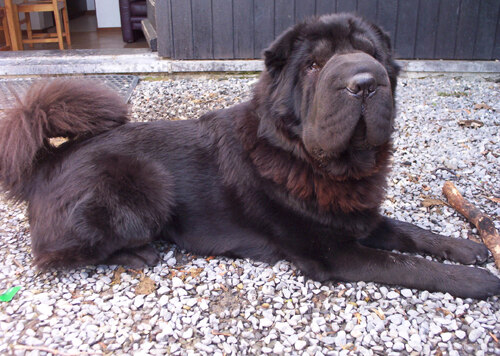
Figure: The Shar-Pei’s short coat. ElsBrinkerink at Dutch Wikipedia, Wikimedia Commons[7]

Run a hand along a Shar-Pei’s back and the name, meaning “sand skin,” makes sense. The short, straight hairs feel coarse, standing slightly away from the body and lying flatter on the legs. The coat takes relatively little grooming. The AKC suggests a bath about once a month and a weekly nail trim. Between grooming sessions, get the dog used to having a paw held, an ear flap lifted and the skin beside its face examined. Begin with a brief touch when the dog is relaxed. As it grows comfortable with handling, you will also learn how it usually responds. [1][2][3]
Those little folded ears hide the opening of the ear canal. Once a week, gently lift each flap and look for redness or debris, notice any unusual smell and see whether the dog is comfortable being touched. A clean, comfortable ear can be left alone. When cleaning is needed, use a canine ear cleaner recommended by your veterinarian. Let the dog shake its head, then wipe away visible debris with gauze. Cotton swabs can push material deeper, and hydrogen peroxide can irritate the ear. If the dog suddenly pulls away, or you notice redness, pain or a foul smell, stop and contact your veterinarian before cleaning. [1][3]
Learn what your dog’s eyes look like when it faces you at ease. Its forehead may have looked furrowed for years, but one eye held half shut this morning is a change worth acting on. Shar-Pei can develop eye disorders including entropion, in which the eyelid rolls inward, and glaucoma. New squinting, pawing at an eye, redness, sudden cloudiness or discharge calls for prompt veterinary attention. When you call, say which eye is affected, when you first noticed it and what the dog has been doing. Those observations help the clinic assess the urgency. [1][4]
Picture a weekday from the first walk to the last visitor. Can family members share the outings this dog enjoys? If someone arrives during dinner, will everyone use the familiar cue and give the dog room to settle? Who would notice a change in its eyes or ears and arrange veterinary care? A Shar-Pei can suit a family that enjoys walking and training together and is comfortable giving a reserved dog space around new people. When you meet an individual dog, join its caregiver for a walk and watch how the two interact. That glimpse of everyday life can help you picture the dog in your own home. [1][3][4]
References
-
[1] American Kennel Club. Chinese Shar-Pei.
-
[2] American Kennel Club. Official Standard of the Chinese Shar-Pei. Effective February 28, 1998.
-
[3] Anna Burke. How to Clean a Dog’s Ears. American Kennel Club.
-
[4] Aly Cohen. When to go to the ER - June 2025. Cornell Richard P. Riney Canine Health Center, June 4, 2025.