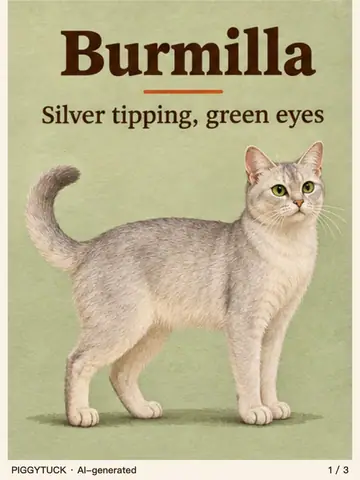
The Burmilla Shorthair (BMS) has a medium-sized body of moderate length: medium-wide rounded chest in profile; a straight back from shoulders to rump; slender, solid-boned legs with hind legs slightly longer, dainty oval paws; and a straight medium-to-long tail tapering from a medium-broad base to a slightly rounded tip.[1] The gently rounded top of head has medium width between the ears, broad at brow and jaw hinge, tapering to a short blunt wedge with slightly rounded contours; the profile shows a gentle nose indentation, with nose tip and chin in line and a firm, deep chin.[1] Ears are medium to large, set wide and slightly tilted forward, broad at the base with slightly rounded tips, their outer line continuing the upper face; eyes are large and well apart, with a blunt-angled upper line toward the nose and a rounder lower line, rims in tipping colour, any shade of green allowed and clear green preferred, with amber permitted in red, cream, and tortie colours.[1] The coat is short, dense, and silky, smooth-lying with enough undercoat for a slight lift; shaded and chinchilla colours are recognised across the colour list.[1] The sections below cover naming and type, silver coat and daily care, then indoor needs and health questions.
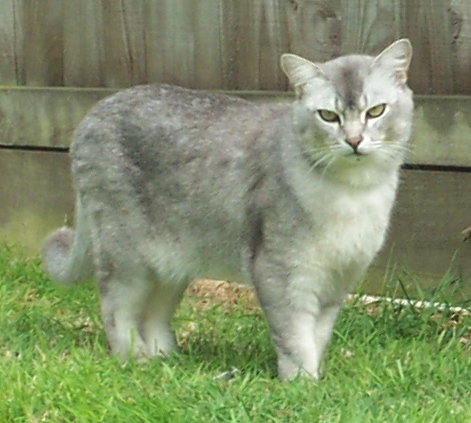
Figure: Silver male Burmilla standing on grass. David Johnson, Wikimedia Commons[4]

How associations name the sparkling silver coat
The Burmilla began with an accidental litter in 1981: before a Chinchilla Persian male was neutered, he met a lilac European Burmese female in Baroness Miranda von Kirchberg’s household, producing four black shaded-silver shorthair females; their contrast prompted a programme for an agouti cat with striking tipping/shading over a white base; Persian ancestry also yielded a semi-longhair Burmilla with an easy-care single coat.[2] CFA accepted registration in 2011 and championship status in 2014.[2] The body is medium-sized and muscular, with a head formed by a rounded top, nose profile, medium-broad muzzle, and well-developed chin; the standout feature is a silky sparkling coat pale at the roots and tipped with colour, plus distinctive “make-up” lining nose, lips, and eyes.[2] That is registry history and ideal type—not a temperament or lifespan promise for one cat.
A pure silver-white ground gives way to tipped colouring (about one-eighth of the hair length, reading lighter overall) or shaded colouring (about one-third, reading darker); chin, ear furnishings, belly, chest, and underside of the tail should be pure white, with face and legs allowed some shading; even tipping creates the sparkle, while tabby marks in tipping, solid hairs, uneven tipping, and brown or yellow tinge are penalised.[2] WCF’s shorthair sheet adds that some cats may carry two Burmese genes (cb cb); yellowish eyes are tolerated up to two years of age, while incorrect adult eye colour after two years, a cobby or oriental body, and a shaggy coat are faults.[1] On points, WCF scores body 25, head and eyes 20 each, and ears, coat texture, and tipping evenness 10 each—so type and eye colour matter alongside “how silver.”[1]
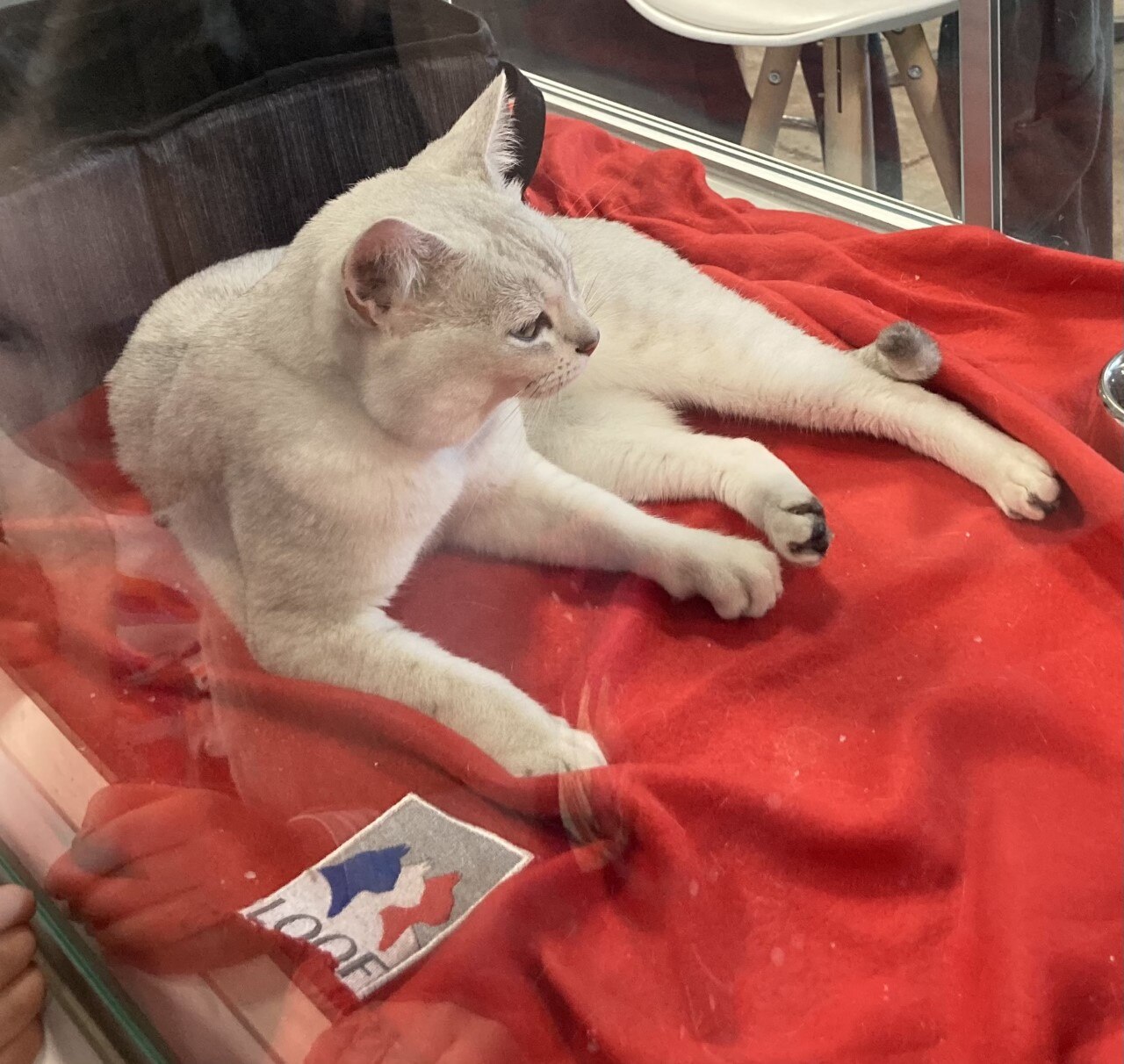
Figure: Burmilla lying on a red show blanket. Thomon, Wikimedia Commons

Grooming, interaction, and indoor life
Both short-haired and long-haired Burmillas shed. Brush or comb at least weekly with a stainless-steel comb or a small slicker, and increase the frequency when shedding picks up. Check nails, ears, and teeth regularly. The slight lift in the short coat comes from the undercoat, so brush gently to remove loose hair.[1][2] Many Burmillas remain playful as adults. Offer toys and a high resting place, and adjust interaction to the individual cat.[2]
Indoors, provide a safe retreat, separated food, water and litter, opportunities to chase and pounce, predictable social contact, and respect for the cat’s senses. A sturdy tree, rotating toys, and several lookout spots give a Burmilla a range of places to play and rest. Distribute the resources around the home if several cats share it.[2][3]
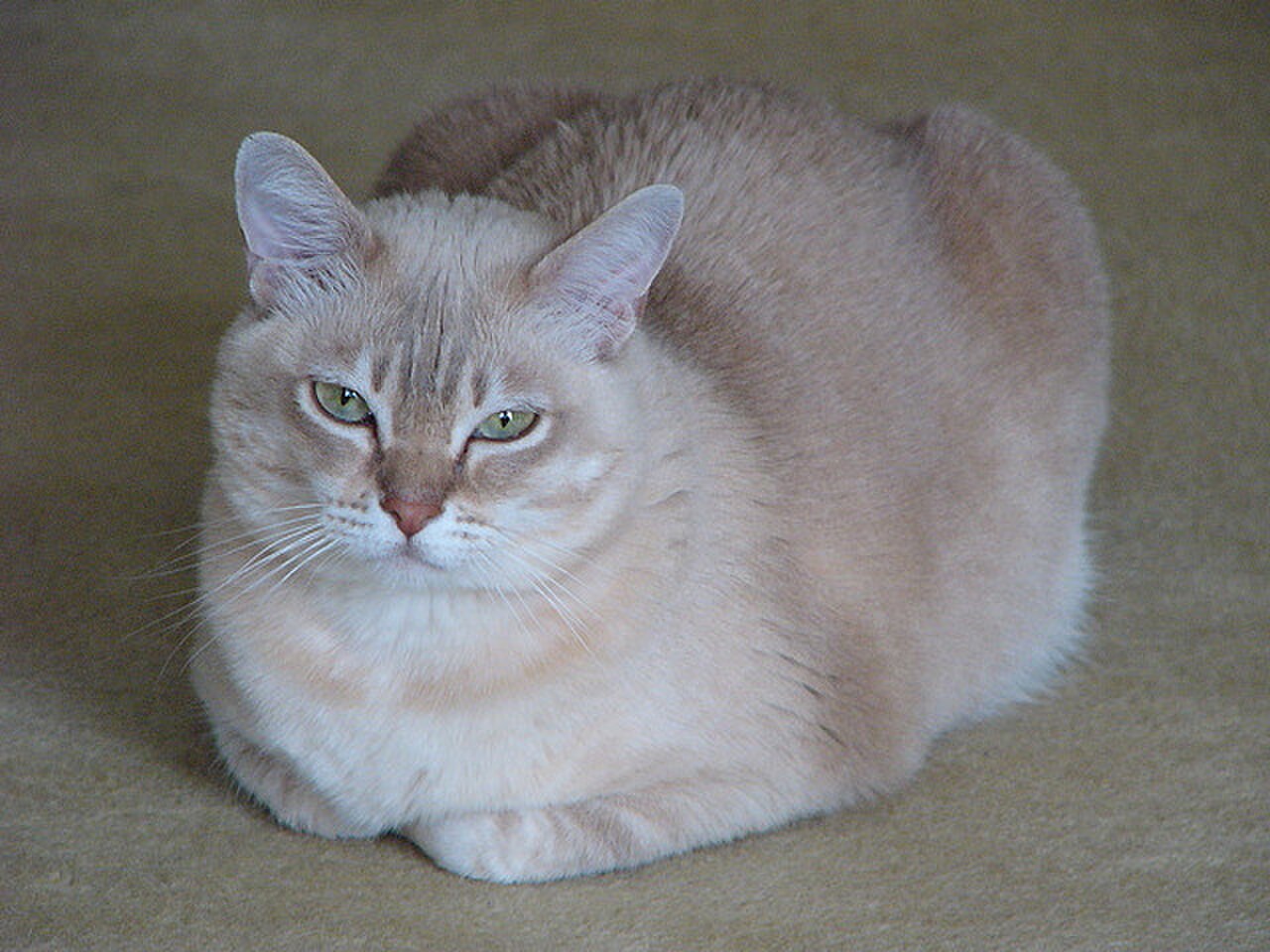
Figure: Burmilla loafing on carpet, head and chest. John Turner, Wikimedia Commons

How to ask health questions
Burmillas can inherit health risks from their Burmese and Persian ancestry. Breeders may test the parents and introduce unrelated lines to maintain genetic diversity. Ask about family cardiac imaging, kidney tests, and any other screening relevant to the parent lines. Keep up with routine veterinary care and seek help if the cat’s breathing, drinking, urination, or activity changes.[2]
To identify a Burmilla, prioritise even tipping or shading over a silver-white ground, nose–lip–eye make-up, green eye rims, and medium foreign type; to live with one, plan weekly grooming, the five indoor pillars, and parent-breed screening questions. Use grooming and play to learn the cat’s habits, and speak to a veterinarian about changes in health.
References
-
World Cat Federation. Burmilla Shorthair (BMS) breed standard (2010-01-01). https://wcf.de/pdf-en/breed/BMS_en_2010-01-01.pdf
-
Cat Fanciers' Association. Burmilla. https://cfa.org/breed/burmilla/
-
Feline Veterinary Medical Association. Meeting the Physical and Emotional Needs of Indoor Cats (position statement news, 2025-08-28). https://catvets.com/news/2025-indoor-cats-position-statement/
-
Wikimedia Commons. File:Male Burmilla cat.jpeg. https://commons.wikimedia.org/wiki/File:Male_Burmilla_cat.jpeg