
A young black-and-rust Dobermann. Photo: Andrea Pilotti; source: Flickr; license: CC BY 2.0.
The Dobermann (Doberman Pinscher in North America) originated in late-nineteenth-century Apolda, Germany, and takes its name from breeder Louis Dobermann. Square in outline, muscular, with a short glossy coat, the breed standard calls for an alert, courageous dog that is friendly and loyal with family. Dobermanns learn quickly, but they are high-energy: more than two hours of exercise a day plus ongoing training; hereditary conditions such as dilated cardiomyopathy are also worth every owner knowing about in advance.
Origins and naming
The Dobermann’s homeland is Apolda in Thuringia, Germany. Per the AKC (American Kennel Club), the breed took shape around 1890 and is named for local Karl Friedrich Louis Dobermann. He worked as a tax collector, night watchman, and dogcatcher, and needed a dog that could keep pace with him and protect him. Exactly which breeds were crossed is no longer recorded with certainty; the AKC thinks German Pinschers, Rottweilers, Weimaraners, and black-and-tan Manchester Terriers may have been among them.
Dobermann died in 1894. Five years later, fellow townsman and liqueur merchant Otto Göller founded the first Dobermann club and helped draft the first breed standard. The breed soon left Germany: the AKC recognized it in 1908; the Fédération Cynologique Internationale (FCI) gave formal recognition in 1955, with Germany as country of origin. The name also varies by region: Germany later dropped “Pinscher” (meaning terrier-type) and kept only Dobermann, and Britain followed; North America has kept Doberman Pinscher.
Appearance and everyday grooming
The Dobermann’s body is nearly square: height from ground to withers is roughly equal to length from forechest to the rear of the thigh. Overall muscle is firm and lines are clean, combining speed and endurance. Kennel organizations differ slightly on size:
- FCI standard (2015 edition): dogs 68–72 cm at the withers, about 40–45 kg; bitches 63–68 cm, about 32–35 kg.
- AKC: dogs 26–28 inches (about 66–71 cm), 75–100 lb (about 34–45 kg); bitches 24–26 inches (about 61–66 cm), 60–90 lb (about 27–41 kg).
On color, the FCI recognizes only two: black or brown with clear rust-red markings; the AKC lists black, red, blue, and fawn (Isabella) ground colors, also with rust markings. Dobermanns are short-coated and relatively easy to groom. The AKC suggests a quick daily pass with a short brush or grooming mitt, baths only as needed, nails trimmed at least monthly, plus regular tooth brushing and ear cleaning; The Kennel Club’s breed page marks brushing as weekly. On lifespan, the AKC gives 10–12 years; The Kennel Club notes 10 years or more.
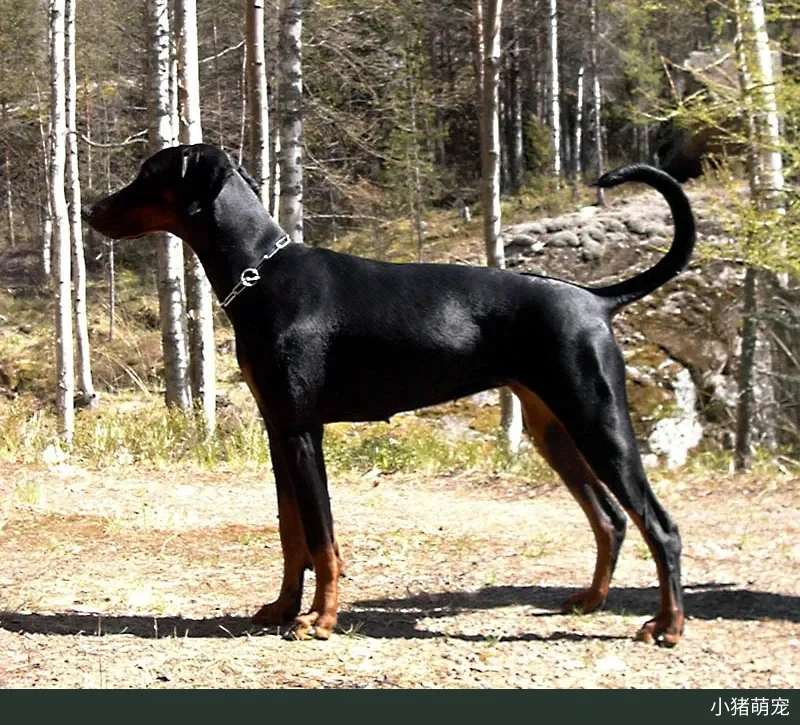
Side stance of bitch Dobermann D'obeys Dazzling Dawn: height at withers nearly equal to body length, square outline. Photo: Stonda; source: Wikimedia Commons; license: CC BY-SA 3.0.

Temperament, exercise, and training
Temperament first. The FCI standard describes the Dobermann as friendly and composed, strongly attached to family; medium excitability and medium alertness are preferred, easy to train and willing to work, with confidence and courage. The AKC standard stresses energy, alertness, determination, fearlessness, loyalty, and obedience, and requires judges to excuse shy or aggressive individuals from the ring. In other words, the ideal Dobermann in the standard is steady first—not fierce.
Exercise needs are high. The Kennel Club recommends more than two hours of exercise daily for adult Dobermanns; the UK veterinary charity PDSA likewise suggests at least two hours a day, ideally spread through the day: several walks, plus off-leash running in a safe enclosed area, mixed with play and training. The AKC notes that long walks, hiking, and dog sports such as obedience, tracking, and agility all suit the breed and tax both body and mind.
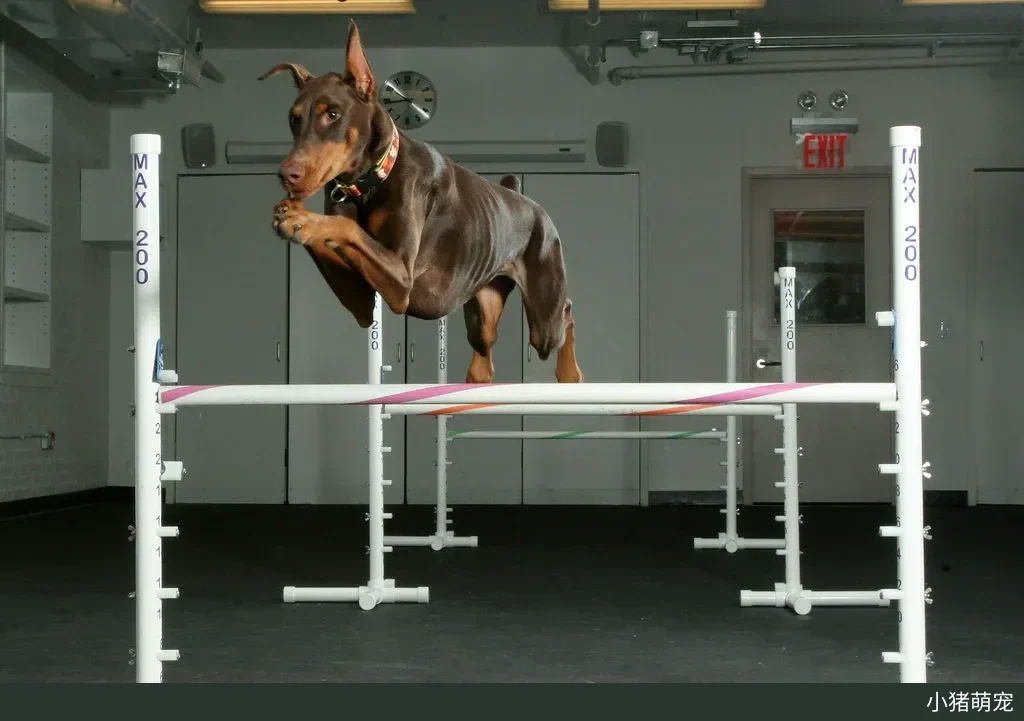
Red Dobermann Marea practicing an agility jump indoors. Photo: Andrea Arden; source: Flickr; license: CC BY 2.0.
Dobermanns learn fast and are strong. The AKC warns that without early guidance they can become pushy, destructive, and hard to manage, so socialization and obedience training should start in puppyhood, with puppy classes recommended; the AKC also advocates keeping Dobermanns indoors with the family rather than outdoors. Excited young Dobermanns often jump and paw people—teach polite greetings before they reach adult weight. Large-breed growth plates usually close at 16–18 months; jump height and footing for puppy agility should match age. PDSA also notes that the breed’s size and strength may not suit homes with young children or first-time dog owners.
Common health issues
The AKC regards Dobermanns as generally healthy, but several issues are worth knowing: potentially life-threatening gastric dilatation–volvulus (“bloat”), plus hip dysplasia, dilated cardiomyopathy, von Willebrand disease, progressive retinal atrophy, albinism, and hypothyroidism among hereditary concerns. VCA Animal Hospitals breed materials also list cervical vertebral instability (“wobbler syndrome”) and other problems.
Most watched is dilated cardiomyopathy (DCM): the heart muscle weakens, the heart enlarges, and pumping grows harder. Cornell University College of Veterinary Medicine notes that early disease often has few clear signs and is frequently found only after heart failure develops; VCA also warns it can cause sudden death. Screening guidelines from the European Society of Veterinary Cardiology in 2017 state that DCM in Dobermanns is hereditary, citing prevalence as high as 58%; the guidelines recommend yearly combined 24-hour Holter monitoring and echocardiography from age three, because one normal exam does not rule out later disease. Cornell also notes variants in PDK4 and TTN linked to DCM risk in Dobermanns, especially U.S. lines, but carrying a variant does not mean disease is inevitable.
Von Willebrand disease (vWD) is a hereditary bleeding disorder caused by lack of von Willebrand factor that helps clotting. Cornell materials place Dobermanns in Type 1—reduced quantity of structurally normal factor—with severity varying by dog; VCA notes it is among the most common hereditary bleeding disorders in dogs, and genetic testing is usually used to screen breeding dogs. Breed-club tests listed on the AKC page include cardiac exams and vWD genetic testing; the AKC advises against buying puppies from breeders who have not genetically tested breeding stock.
These are breed-level risk tendencies, not a prediction that every Dobermann will get sick. Which checks to run and how often should be decided with your veterinarian.
References
-
American Kennel Club. Doberman Pinscher Dog Breed Information
-
American Kennel Club. Doberman Pinscher History: Where the Breed Originated
-
American Kennel Club. Facts About the Doberman Pinscher That You May Not Know
-
American Kennel Club. How to Train a Doberman Pinscher Puppy: Milestones & Timeline
-
American Kennel Club. Official Standard of the Doberman Pinscher
-
Fédération Cynologique Internationale. DOBERMANN (143)
-
Fédération Cynologique Internationale. FCI-Standard N° 143: Dobermann (official valid standard published 2015-11-13)
-
The Kennel Club. Dobermann | Breeds A to Z
-
PDSA. Dobermann
-
VCA Animal Hospitals. Doberman Pinscher
-
VCA Animal Hospitals. Von Willebrand Disease Testing
-
Cornell University College of Veterinary Medicine. Dilated cardiomyopathy
-
Cornell University College of Veterinary Medicine. Canine von Willebrand Disease
-
Wess G, Domenech O, Dukes-McEwan J, Häggström J, Gordon S. European Society of Veterinary Cardiology screening guidelines for dilated cardiomyopathy in Doberman Pinschers. Journal of Veterinary Cardiology, 2017, 19(5): 405–415.