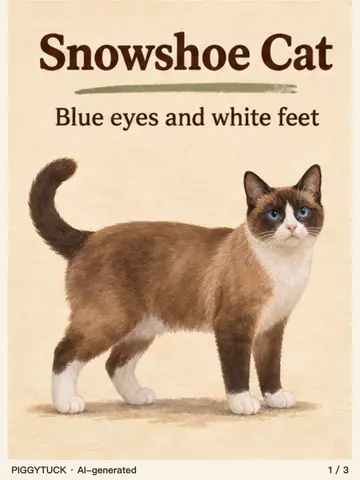
To recognise a Snowshoe, start with how registries name and describe type and pattern, then keep the show ideal separate from home care. The Snowshoe (SNO) is a medium cat combining the sturdy build of shorthair ancestors with the length of oriental ancestors; the body is long and firm without extremes, with medium bone and muscle, well-knit and powerful but not bulky.[1] Legs are proportionate with medium bone; hind legs slightly higher than the front so the backline rises a little to the rear; paws are short and oval.[1] The tail is medium at the base, slightly tapering, medium to long.[1] The head is a broad modified wedge with slightly rounded contours, medium in length and size for the body; the top is slightly rounded and the forehead slightly flat; cheekbones sit high and round; the nose is straight and medium; the muzzle is neither extremely broad, pointed, nor square, with a slight break; the chin is firm.[1] Ears are broad at the base with slightly rounded tips, medium to medium-large, continuing the modified wedge, with sparse furnishing.[1] Eyes are walnut-shaped, longer than wide, medium, slanted toward the ear base, set about one eye-width apart; the outer edge aligns with the ear base; colour must be blue—bright and expressive.[1] The coat is short to medium-short with no noticeable undercoat, smooth, glossy, and close-lying.[1] The sections below cover pattern and scoring, short-coat routines and indoor space, then health questions—without dressing generic cat care as breed-only proof, and without promising temperament or health from a single photo.
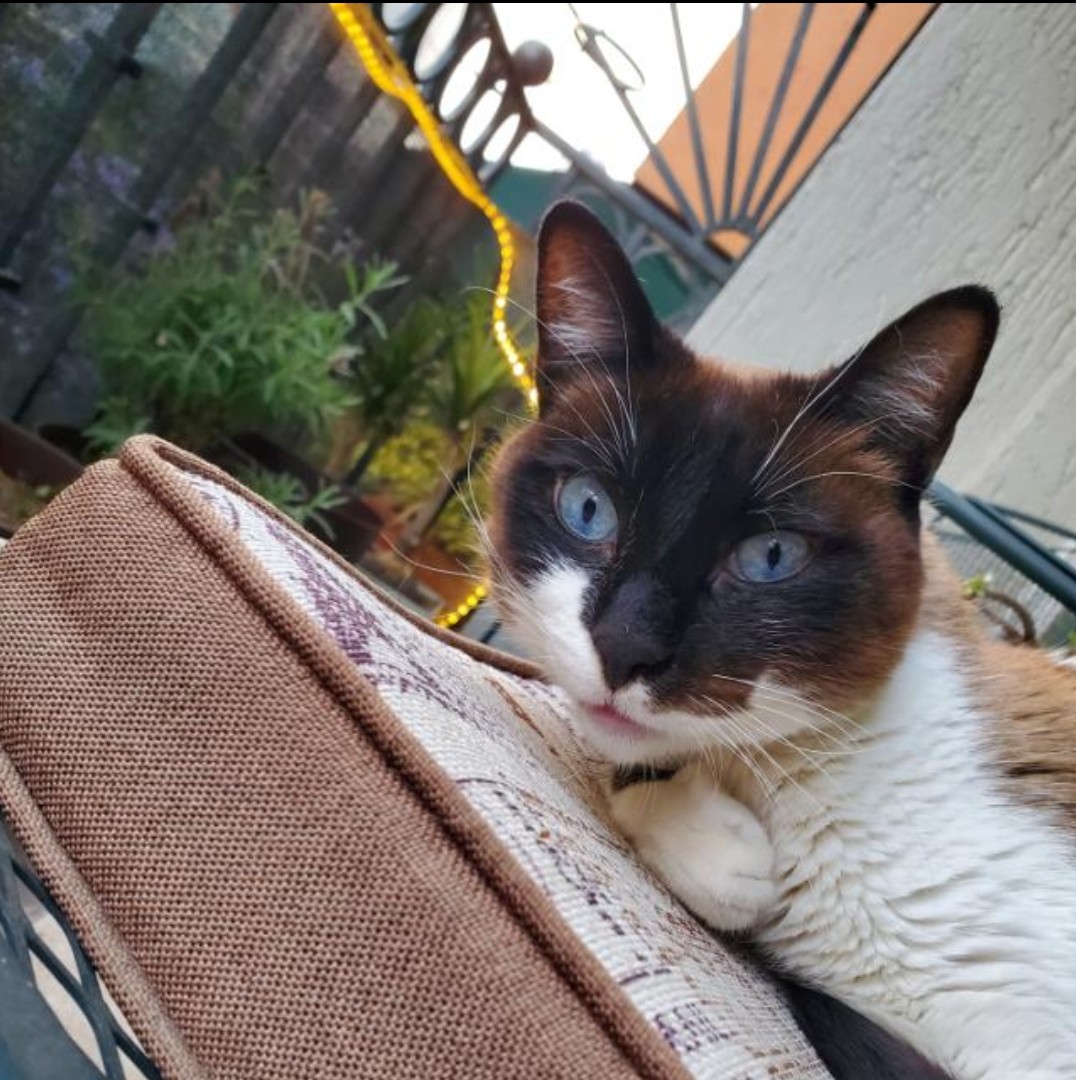
Figure: Snowshoe face on a patio chair. Icnataba, Wikimedia Commons[3]

How the registry frames points and white
Except for Sunshine, Amber, Silver, and Golden colour variants, all colours with or without tabby are allowed; body colour is a paler tone of the points, and any amount of white on the body is permitted.[1] The preferred pattern is a white inverted “V” on the face and a white shoe pattern.[1] Points on ears, mask, legs, and tail should be well defined and in harmony with the body; the chin may be white, pointed, or mixed; a white bib or collar and white on the stomach are normal.[1] Nose leather may be pink, flesh-coloured, or mottled.[1] White shoes: front legs from toes to mid-leg, hind legs from toes to mid-thigh; any degree of white is acceptable, but all four feet must be white.[1] Scoring gives body 25, head 20, eyes 15, ears 5, coat texture/length 20, body colour and points 10, and condition 5—so type and coat weigh heavily; “a pointed cat with white feet” is not enough by itself.[1] Faults and certificate exclusions hard-code resemblance to Oriental/Siamese type, non-blue eyes, missing foot white, and legs that are too short; disqualification likewise lists non-blue eyes and too-short legs.[1] Permitted outcrosses: none.[1] These are show ideals and registration language; they do not alone prove temperament, activity needs, or disease risk for any individual.
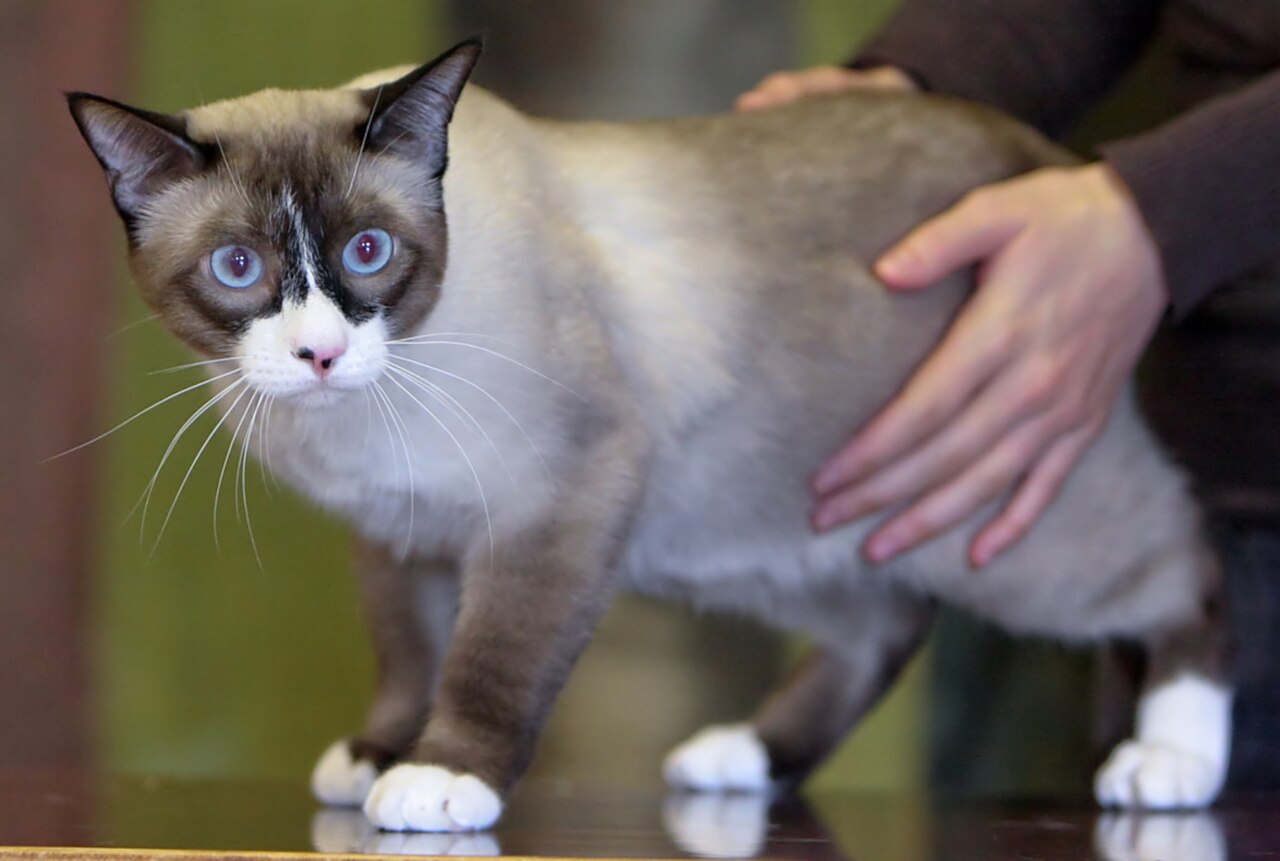
Figure: Seal-point Snowshoe on a show table. Heikki Siltala, Wikimedia Commons

Coat care and life indoors
A Snowshoe’s short to medium-short coat normally needs a gentle weekly brush to remove loose hair. Bathe when dirty, and check the ears, skin, and nail length as part of the routine.[1] Indoors, provide a sturdy perch, a quiet retreat, regular play, and places to eat, drink, and use the litter box without interruption. In multi-cat homes, spread these resources out and watch how each cat uses them.[2]
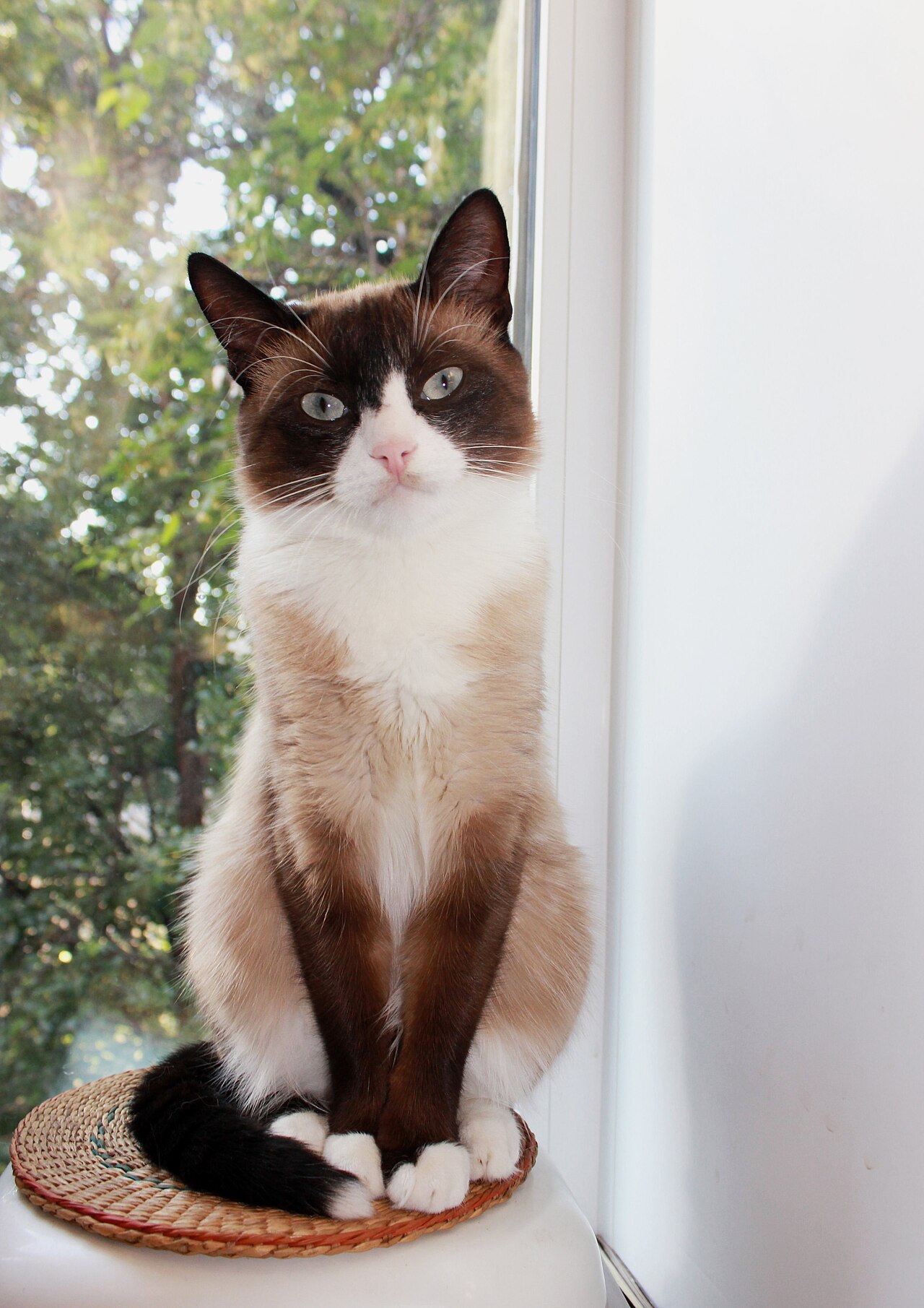
Figure: Snowshoe sitting on a round mat on a windowsill. SnowshoeCatRu, Wikimedia Commons

Health questions and veterinary paths
The blue eyes, white feet, and body shape help identify a Snowshoe. Ask about the individual cat’s health separately.[1] When buying or adopting, ask breeders or rescue for pedigree, recent exams, and vaccine/parasite records, and for any near-relative history of eye, dental, or chronic issues—keep checkable notes rather than deciding from boot photos alone. At home, follow veterinary vaccine and parasite plans, weigh regularly, and watch the mouth; seek care promptly for appetite loss, polydipsia/polyuria, litter-box changes, or gait or vision concerns. For indoor welfare, use the FelineVMA statement as a checklist when talking with your vet about environment and behaviour, not as a substitute for individual diagnosis.[2] An inverted V and white boots help match registration ideals; temperament, health, and longevity still rest on living with the cat and veterinary judgment.
If blue eyes, an inverted facial V, and four white boots drew you in, first check whether the registry’s type and colour bounds match the individual in front of you, then keep short-coat grooming simple and treat climbing, play, and retreat space as seriously as pattern. Show standards help recognise an ideal Snowshoe outline; they do not prove temperament or replace health conversations. Watch how the cat uses its play, resting, and feeding areas, and adjust them as needed.
References
-
World Cat Federation. Snowshoe (SNO) breed standard (2020-06-28). https://wcf.de/pdf-en/breed/Snowshoe_2020_06_EN.pdf
-
Feline Veterinary Medical Association. Meeting the Physical and Emotional Needs of Indoor Cats (position statement news overview). https://catvets.com/news/2025-indoor-cats-position-statement/
-
Icnataba. Snowshoe cat.jpg. Wikimedia Commons. https://commons.wikimedia.org/wiki/File:Snowshoe_cat.jpg