
A dog named Link habitually eats lying down, forelegs straddling the bowl. Photo: Tony Alter (Tobyotter); source: Flickr; license: CC BY 2.0.
A Spanish research team published a pilot study in Veterinary Sciences in August 2026: after nine healthy dogs took capsules combining aloe, sweet wormwood (Artemisia annua), and turmeric for 30 days, several fecal bacterial groups linked to short-chain fatty acid production were more abundant than in a placebo group, and several opportunistic pathogens were less abundant—but overall microbiome diversity did not differ significantly, and the study did not measure clinical outcomes such as digestive health.
Study overview: who did it and how
The paper is titled “Impact of Combined Botanical Functional Ingredients on the Canine Gut Microbiome,” submitted 21 July 2026, accepted 20 August, and published online 26 August (Vet. Sci. 13(9), 877). Authors are from two Barcelona companies: Biotech Tricopharming Research, which develops botanical animal-health products, and Sequentia Biotech, which provides the GAIA metagenomics analysis software. On 14 October, PetfoodIndustry reporter Tim Wall covered the study; this article traced back to the original paper for verification.
The trial enrolled 18 healthy pet dogs whose owners volunteered, excluding dogs with diagnosed disease, those on medication or other supplements, and those not dewormed. Researchers did not formally randomize; they balanced dogs into two groups by sex, age, weight, and neuter status, and owners were blinded to group assignment. The treatment group received daily, per 10 kg body weight, 25 mg aloe (200:1 extract), 200 mg sweet wormwood (Artemisia annua, the natural source of artemisinin), and 500 mg turmeric, plus 50 mg microcrystalline cellulose; controls received 100 mg microcrystalline cellulose per 10 kg as placebo. Both groups were dosed by capsule for 30 days. Owners collected feces on days 0 and 30 in nucleic-acid preservation tubes; samples underwent shotgun metagenomic sequencing to identify microbes and predicted metabolic functions.
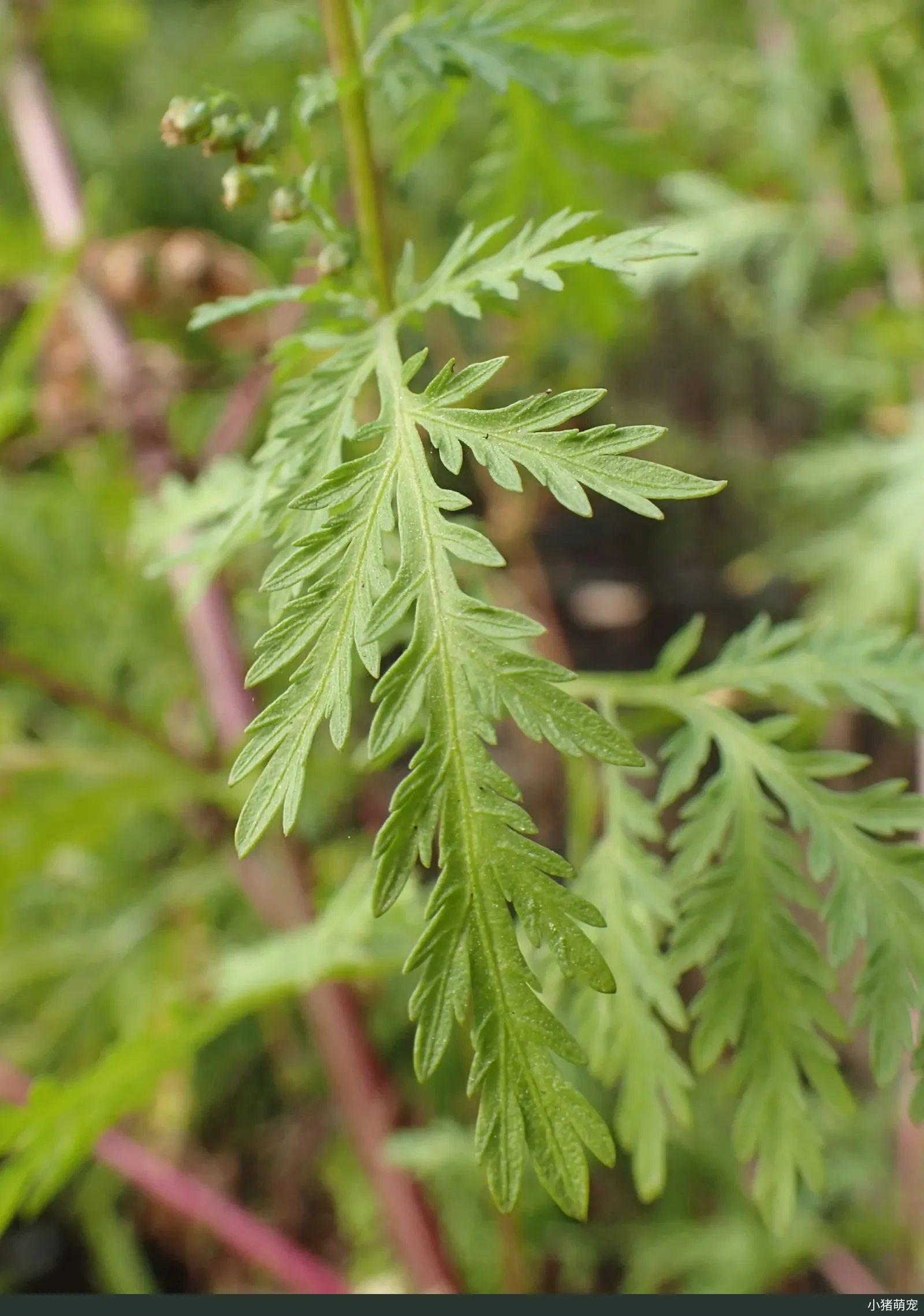
Sweet wormwood (Artemisia annua), photographed at the UMCS Botanical Garden in Lublin, Poland; the trial’s sweet wormwood was produced by the authors’ company on Tenerife, Spain. Photo: Krzysztof Ziarnek (Kenraiz); source: Wikimedia Commons; license: CC BY-SA 4.0.

Main findings: local community shifts, overall diversity unchanged
On day 30, several bacteria linked to fermentation and short-chain fatty acids (butyrate, propionate, acetate) were significantly more abundant in treatment feces than controls, including Megasphaera elsdenii, Butyricimonas virosa, Blautia, Bacteroides, and Phascolarctobacterium succinatutens; the paper also listed Fusobacterium. Short-chain fatty acids are fermentation products tied to gut epithelial energy supply, barrier function, and immune modulation. Amedibacterium intestinale and Alistipes onderdonkii also increased, though the authors acknowledge their roles in the canine gut remain unclear.
On the decrease side were three taxa: Enterocloster bolteae (linked to dysbiosis in human studies; little known in dogs), Anaerobiospirillum (can inhabit dog guts and has been reported in opportunistic infections such as canine peritonitis), and Stenotrophomonas maltophilia (a multidrug-resistant opportunist linked in dogs to urinary tract infection and chronic respiratory disease). The treatment group also showed more Myoviridae-like bacteriophages—viruses that infect bacteria—but the study did not test whether they drove the bacterial shifts. Functional prediction showed fewer pathways related to virulence and siderophore systems and more related to GABA and putrescine metabolism. These are gene-level “potential” only, not proof that the corresponding substances were produced.
Overall, microbiome diversity did not differ statistically between groups: median observed species were 1,132 (treatment) vs 859 (control) (p = 0.19); Chao1 indices 1,619 vs 1,281 (p = 0.19); Bray–Curtis community composition heavily overlapped (PERMANOVA p = 0.709). Authors therefore interpret selective local change rather than a wholesale remake of the gut microbiome—like a few flowers increasing and a few weeds decreasing in a garden whose overall look barely changes.
Limitations and conflicts of interest
Both the paper’s authors and PetfoodIndustry’s coverage list clear limits. First, only nine dogs per group, so statistical power is limited; the authors themselves frame results as preliminary, hypothesis-generating evidence. Second, no formal randomization; diets varied (the paper reports 42.85% mainly dry food, 33% mixed wet/dry, the rest raw or natural ingredients), and age and breed spanned wide ranges—all of which affect the microbiome. Third, although day-0 samples were collected, primary analyses compared only day-30 samples between groups, without tracking within-dog change, so it is hard to separate supplement effects from baseline dog-to-dog differences. Fourth, three botanicals were given together, so which one drove effects is unclear. Fifth, the study measured neither short-chain fatty acid concentrations, inflammatory markers, nor any clinical outcomes—“more related bacteria” cannot yet mean “healthier digestion.” Differential-abundance plots and pathway analyses also used an exploratory FDR < 0.1 threshold, looser than the usual 0.05.
Conflicts of interest also matter. All nine authors are from the two companies above: five employed by Biotech Tricopharming Research, four by Sequentia Biotech; corresponding author Luis Matías-Hernández is CEO of Biotech Tricopharming Research. That firm develops and sells animal-health products containing these three ingredients, and produced the trial’s sweet wormwood; Spanish veterinary outlet Diario Veterinario noted that this combination underpins the company’s ArteBiome® formula. The work received co-funding from CDTI, a public body under Spain’s Ministry of Science, Innovation and Universities. Ethically, the paper states only naturally voided feces were collected, all three plants are on the EU feed-material catalogue, and after consulting the Catalan regional government the work was not classified as an animal-experiment procedure.
Meaning for pet owners and safety notes
For owners, this is an early signal—not a reason to buy related supplements. It only shows that after healthy dogs took this blend for 30 days, relative abundances of certain fecal bacteria differed from placebo; it does not prove better digestion, immunity, or overall health. If a dog has diarrhea, soft stools, or other GI issues, or is on medication or has chronic disease, discuss any botanical supplement with a veterinarian first.
Do not make the formula at home using kitchen ingredients. The trial used standardized materials (each capsule contained 2.6 mg artemisinin and 10 mg curcumin), dosed precisely by weight—very different from kitchen turmeric powder or windowsill aloe. The ASPCA lists aloe as toxic to dogs and cats; saponins and anthraquinones may cause vomiting, lethargy, and diarrhea, and only the gel portion is considered edible; the paper also notes that aloin toxic to dogs is mainly in the outer leaf layers and is usually removed in processing. Keep household aloe out of dogs’ reach.
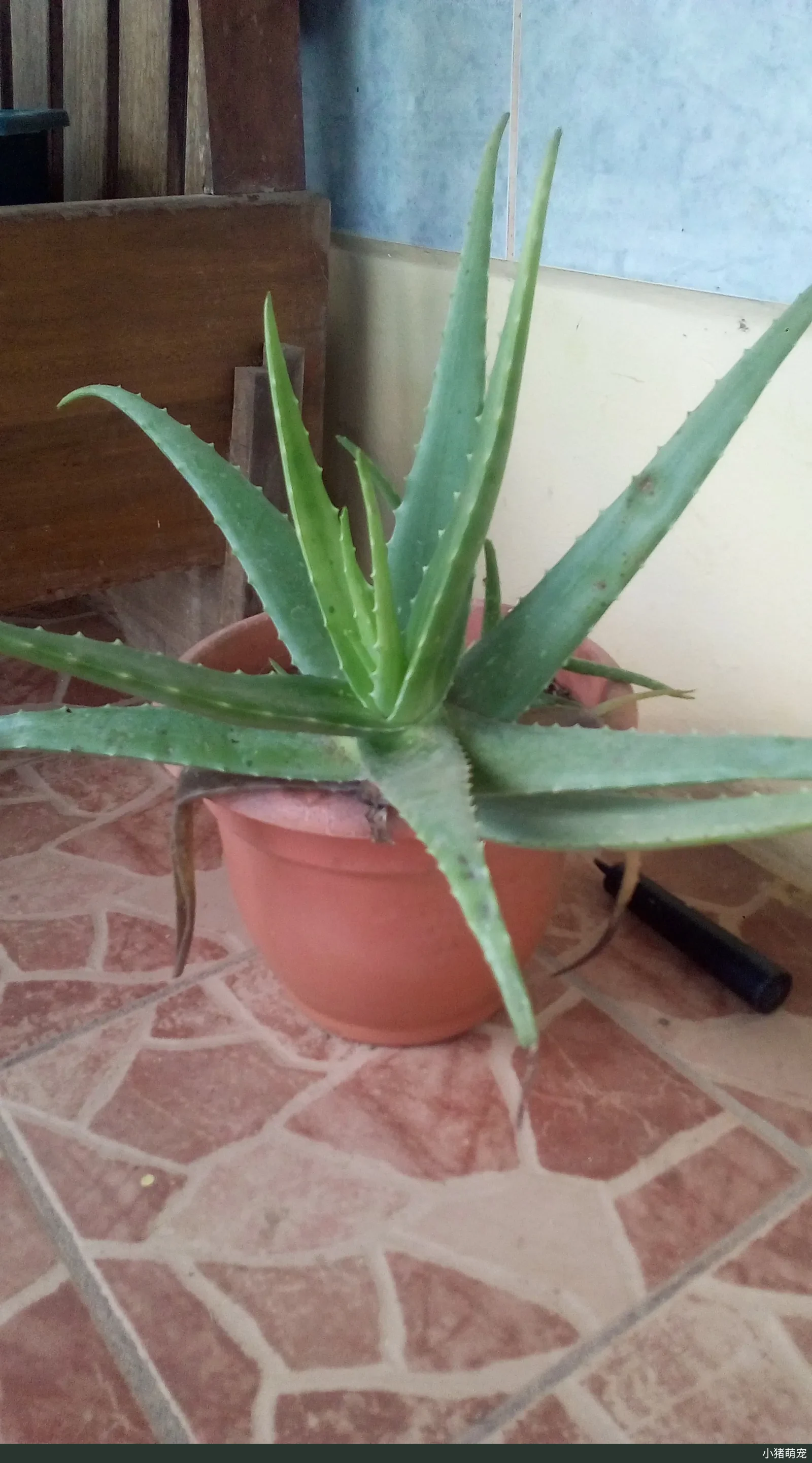
Potted aloe (Aloe vera). ASPCA lists aloe as toxic to dogs; keep plants where dogs cannot chew them. Photo: Lionsleeps23; source: Wikimedia Commons; license: CC BY-SA 4.0.

References
-
Morua E, Criado-Mesas L, Chumaceiro G, et al. Impact of Combined Botanical Functional Ingredients on the Canine Gut Microbiome. Veterinary Sciences, 2026, 13(9): 877. DOI: 10.3390/vetsci13090877 (published 2026-08-26)
-
Tim Wall. Aloe vera, wormwood, turmeric blend may alter dog gut bacteria. PetfoodIndustry, 2026-10-14.
-
Juan Pedro. Una combinación de aloe vera, artemisa y cúrcuma muestra efectos prometedores sobre la microbiota intestinal de los perros. Diario Veterinario, 2026-08-31.
-
ASPCA Animal Poison Control. Toxic and Non-toxic Plants: Aloe. Page undated; accessed 2026-10-17.