The Beagle is a small scent hound that originated in Britain. A solid build, long drooping ears, and a short dense coat make it easy to recognize. It is usually lively, likes company, and is easily drawn by a scent. Living with one means arranging sniffing, training, and safety management as well as a daily walk, and watching weight, ears, and inherited health risks.
Origin, classification, and outline
The FCI places the Beagle in Group 6, scent hounds and related breeds, section 1.3, small hounds. The country of origin is the United Kingdom. The traditional use is following a scent after hare. The standard keeps a speculative tone about descent from larger foxhounds. That should not be read as a settled, complete genealogy.
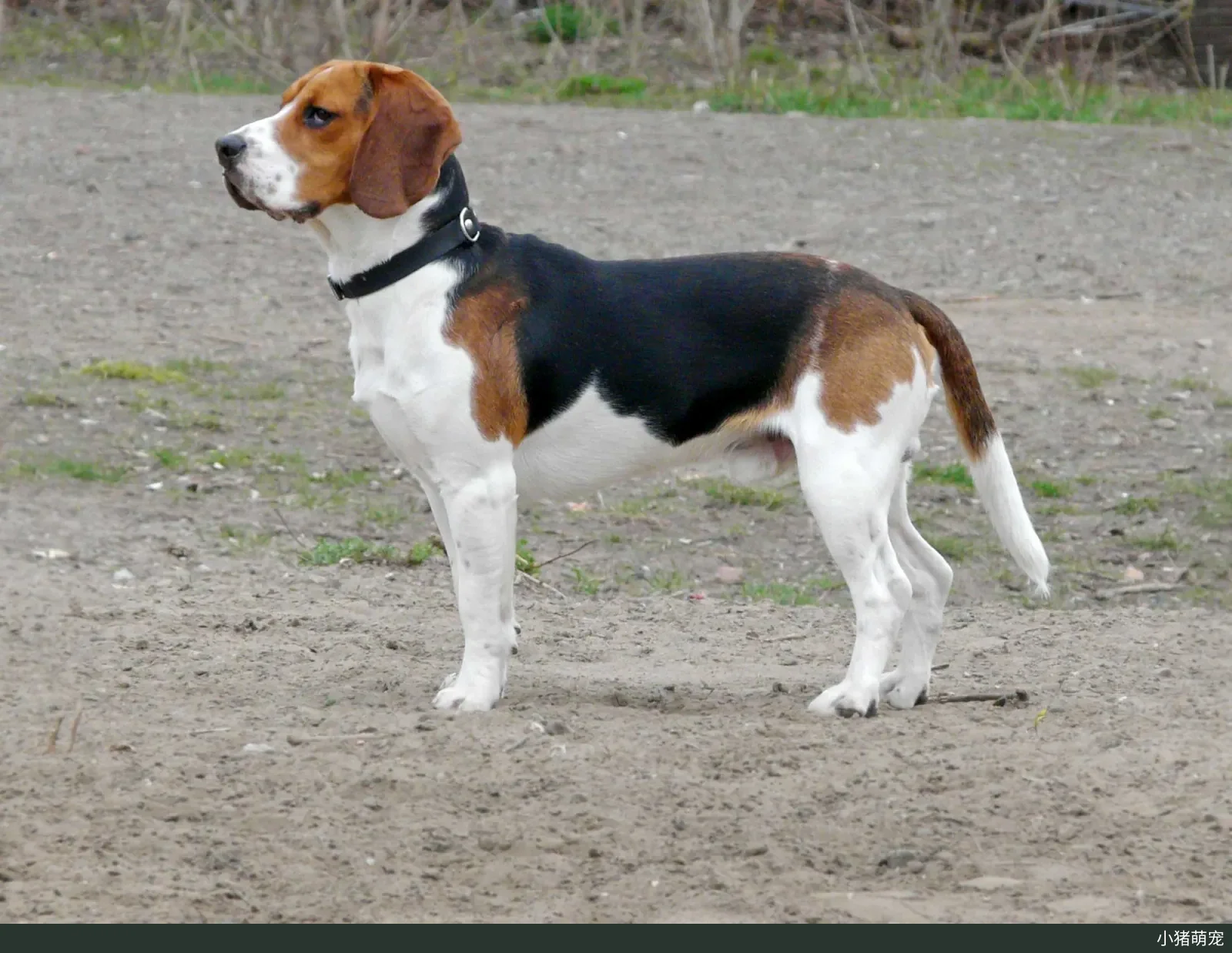
The body is solid and compact. The ears are set low, hang down, and are rounded at the ends. The coat is short and dense. Black, tan, and white is only one of the permitted colors. The FCI standard’s ideal shoulder height is 33–40 centimeters. Those are descriptions in that standard. Color or size alone cannot decide a dog’s pedigree or health.

Temperament, exercise, and training
A background of hunting in a pack means Beagles are usually glad of company. The AKC also describes the breed as cheerful and easygoing. That does not guarantee that every dog will adapt to children or to other animals. Socialization while young, and supervision when they are together, still matter. Contact with small pets needs management in particular.
The dog needs regular activity and something to think about. PetMD suggests at least one hour of exercise a day. PDSA’s table says one hour, while the body text says at least an hour and a half, so those numbers are better used as a reference for arranging a life, and the intensity should change with age and health. Besides walks, sniffing games and short training sessions can be added, with rewards used to build consistent rules. A leash outdoors, a check of the fence, and recall practice in a safely enclosed area help manage the tendency to chase a scent.
Health risks and day-to-day care
Veterinary sources say to watch for obesity, inflammation or infection of the ear canal, and problems such as epilepsy, hypothyroidism, and cherry eye. A breed risk does not mean every dog becomes ill, and the sources do not provide figures from which an individual probability could be calculated. Day to day, feed a measured amount, count training treats in the total intake, and notice changes in weight and in the ears. Scratching at an ear, an unusual smell, or a seizure is a reason to contact a veterinarian. A breed profile is not a basis for diagnosing or medicating on your own. When choosing a puppy, you can ask the breeder for the parents’ health-screening records and ask a veterinarian to explain what those records cover and where they stop.
References
- FCI, FCI-Standard N° 161: BEAGLE. Effective date of the standard: 8 September 2026. Date of the English version: 6 October 2026.
- AKC, Beagle Dog Breed Information. The page does not show a publication date.
- PDSA, Beagle. The page does not show a publication date. The stated exercise time differs within the page.
- Tiffany Paul, DVM, reviewed by Jennifer Coates, DVM, Beagle. Updated 14 October 2026. A first publication date was not seen.
All of these were accessed on 26 October 2026. A breed standard is for understanding typical traits. A veterinary explainer is a general reference for care.