In a dense Finnish forest, a hunter might hear the dog beneath a tree long before catching sight of the bird in its branches. A Finnish Spitz follows the bird’s scent, looks up, and barks repeatedly. The hunter follows the sound and, closer to the tree, can pick out the dog’s plumed tail waving slowly through the foliage. For generations, this was how dog and hunter worked together. It makes sense that a Finnish Spitz will speak up when something catches its attention. Before bringing one home, it’s worth agreeing on a small detail. Once the doorbell rings and the dog barks, where would you like the dog to go? [1]
Recognizing a Finnish Spitz in Profile
The red coat usually catches your eye first. Take a step back and the proportions come into view. A Finnish Spitz stands about as tall at the shoulder as it is long in the body, giving it an almost square outline. The back is level, the chest reaches roughly to the elbows, and the dog stands lightly on its feet. The tail arches forward from its base, then curls back against one thigh. To see where it ends in the photograph, follow the long, pale gold hairs down toward the thigh. They stand out against the darker hair on the back. [1][3]

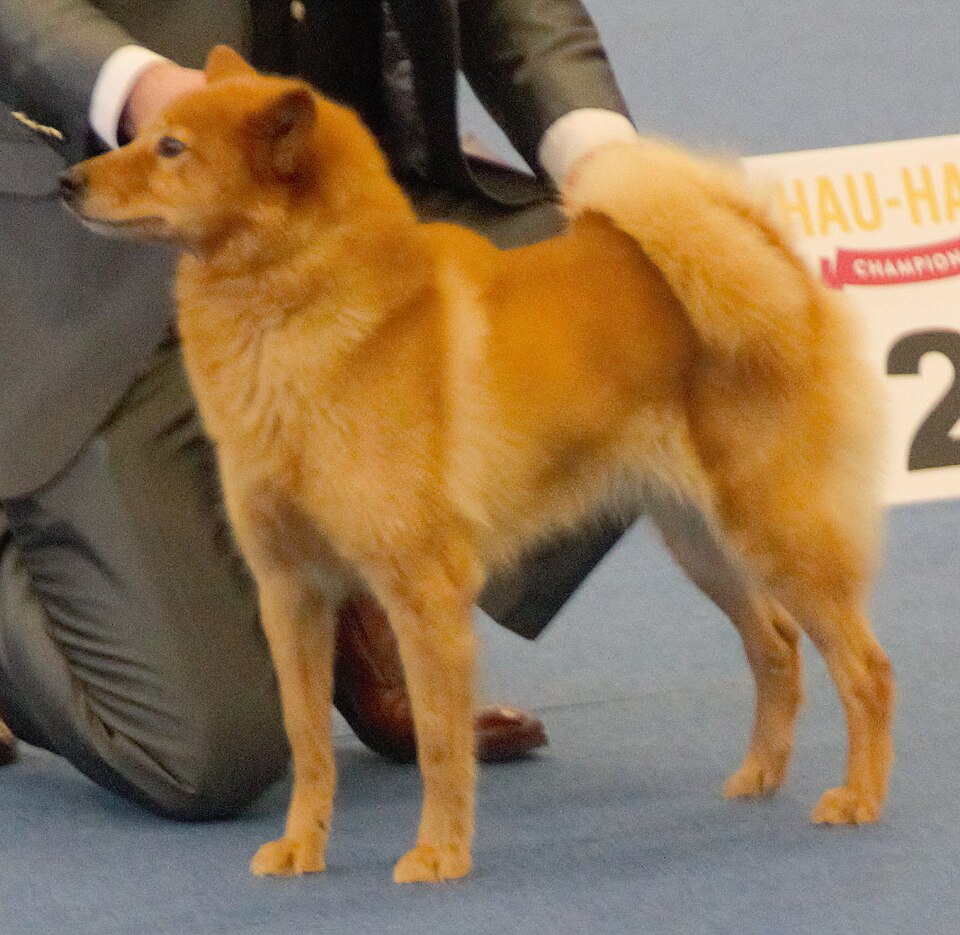
The Finnish Spitz has a nearly square outline. Canarian, Wikimedia Commons[3]
Now look at the foxlike face. It narrows from the cheeks to a black nose. The dark, almond-shaped eyes sit at a slight slant, and two small triangular ears sit high on the head. The ears move independently. One can swivel to the side while the other faces forward. When the dog is alert, the tips stand upright and the openings face ahead. Short, close hair on the face sets off the dark eye rims and the line of the mouth. The legs have similarly short hair, while longer hair covers the neck and shoulders. Taken together, the face, body proportions, and curl of the tail tell you more about the breed than coat color alone. [1][4]

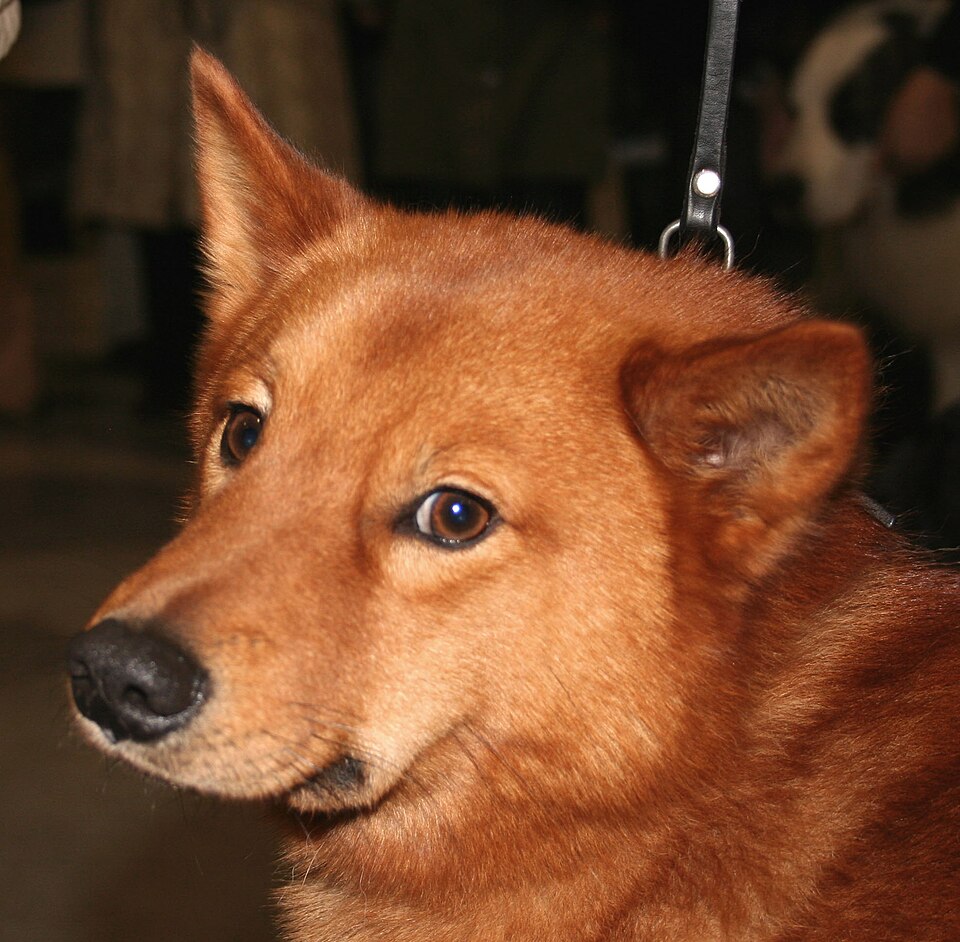
Small, high-set ears frame the pointed face. Pleple2000, Wikimedia Commons[4]
Making Room for Walks on a Workday
A lightly built dog that can spend hours searching the woods has the stamina to follow an interesting scent a long way. The American Kennel Club (AKC) describes the Finnish Spitz’s exercise needs as moderately high and recommends a daily walk on a leash. If you have a yard, it needs a secure fence before you let the dog explore freely. A Finnish Spitz forms close bonds with family members. A yard gives the dog room to run, but time there alone lacks something this breed enjoys about a walk: your company. [1]
Try planning for the busiest weekday in your household. Who can take the dog out in the morning? Who still has time for an unhurried walk in the evening? Choose a stretch where the dog can stop to sniff and you have time to wait. If weekdays allow only quick toilet breaks, a weekend hike still leaves the dog short of company during the week. Walks can vary in length with the dog’s age, stamina, and energy that day. A puppy can have time to explore at an easy pace while it is still too young for sustained, strenuous exercise. [1]
Teaching the Doorbell as a Cue to Go to the Mat
A Finnish Spitz pays attention to strangers and readily makes itself heard. To decide how that might work in your home, spend a moment listening at the front door. How often do footsteps pass in the hall? Is the bell beside a room where someone sleeps during the day? Who will have time to practice with the dog? If your home needs to be quiet enough that a dog can scarcely be heard during the day, weigh that carefully before choosing this breed. If your family is comfortable with an occasional alert, you can give the dog a place to go while you answer the door. [1][2]
Put a mat a few steps from the door, where nobody will have to step over it to let a guest in. Practice when no one is waiting outside. A doorbell recording on your phone will do. Start by letting the dog lick a treat, then play the sound briefly. If the dog hears it and carries on licking comfortably, offer quiet praise. Once that response is consistent, reverse the order. Play the bell first, then give the treat. That’s a good place to finish the first session. The walk to the mat can wait for another day. [2]
Next, when the bell sounds, use a small treat to guide the dog along with you. Give the treat when the dog reaches the mat. Repeat this in short sessions. Once the route is familiar, give it a name the whole family can use, such as “on your mat.” Gradually make the guiding gesture smaller until the dog can find the mat on cue. When that goes smoothly, ask a family member to step outside and ring the bell. Open the door, say a few words, then walk back to reward the dog for staying on the mat. Everyone in the family now knows exactly where to deliver the treat. [2]
Watch the few seconds after the bell rings. Can the dog turn its attention from the door to you? Does it stay on the mat as you reach for the handle? If opening the door sends the dog rushing toward it, finish the next practice attempt at touching the handle. The Finnish Spitz is bright and sensitive. The AKC recommends keeping training sessions short and enjoyable, with plenty of praise and rewards. Early socialization and puppy classes can help a young dog grow familiar with new people, sounds, and places. At your own front door, you can add one small challenge at a time. [1][2]
Brushing the Dense Undercoat
The golden red of a Finnish Spitz ranges from pale honey to deep auburn. The straight, fairly stiff outer hairs cover a short, soft, dense undercoat of a lighter shade. Follow the color from the neck over the shoulders in the photograph. The red deepens across the back, while the chest and inner legs are much paler. The hair is especially full on the tail and the backs of the thighs. When brushing, take a moment to part the long hair in those places and look underneath. [1][5]

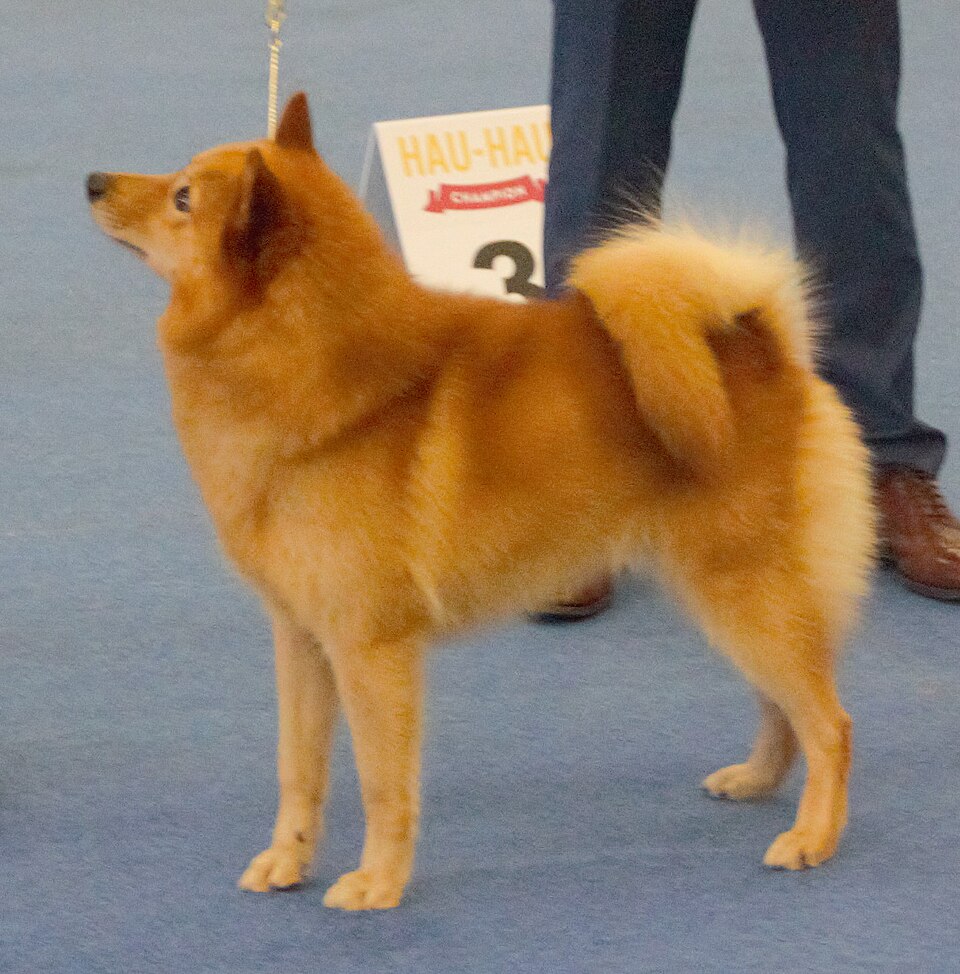
The golden-red coat is darkest across the back. Canarian, Wikimedia Commons[5]
For routine grooming, lightly mist the coat with water and work through it with a pin brush every two or three days. Twice a year, when the dog sheds its undercoat heavily, switch to daily brushing. A comb or slicker brush helps lift out the loose hair. If you bathe the dog, use cool air to dry the coat before brushing. Hot air can dry out the outer hairs. The part to make time for during shedding season is working through the undercoat day after day. The plume of the tail and the longer hair around the neck and shoulders can keep their natural shape. [1]
Planning Exercise for Growing Joints
Before bringing a puppy home, ask the breeder to show you both parents’ health records. Go through them together to see which checks each parent has had for the kneecaps, elbows, hips, and eyes. These records help explain how the breeder assessed risk when choosing the parents. Your puppy’s own growth will guide its exercise plan. At the first veterinary visit, describe the routes you expect to walk and mention any running or hiking you hope to do together. That gives you and your vet more to work with than asking for a number of minutes per day. For now, leave time for the puppy to explore gently. The longer outings can come as it grows. [1]
References
-
[1] American Kennel Club. Finnish Spitz.
-
[2] Sassafras Patterdale. How to Stop Your Dog From Barking at the Doorbell. American Kennel Club.
-
[3] Canarian. File:Finnishspitzpysty1.jpg. Wikimedia Commons.
-
[4] Pleple2000. File:Szpic fiński głowa 222.jpg. Wikimedia Commons.
-
[5] Canarian. File:Finnishspitzpysty2.jpg. Wikimedia Commons.