Standing, a Basset Hound’s height at the withers is no more than 14 inches (about 36 cm), yet it weighs 40 to 65 pounds (about 18 to 29 kg). The American Kennel Club (AKC) breed standard says that, relative to size, its bone is heavier than that of any other breed.[1] Low, heavy, and with ears long enough to cover the nose tip—these traits all serve its original work: staying close to the ground and tracking scent slowly and meticulously.
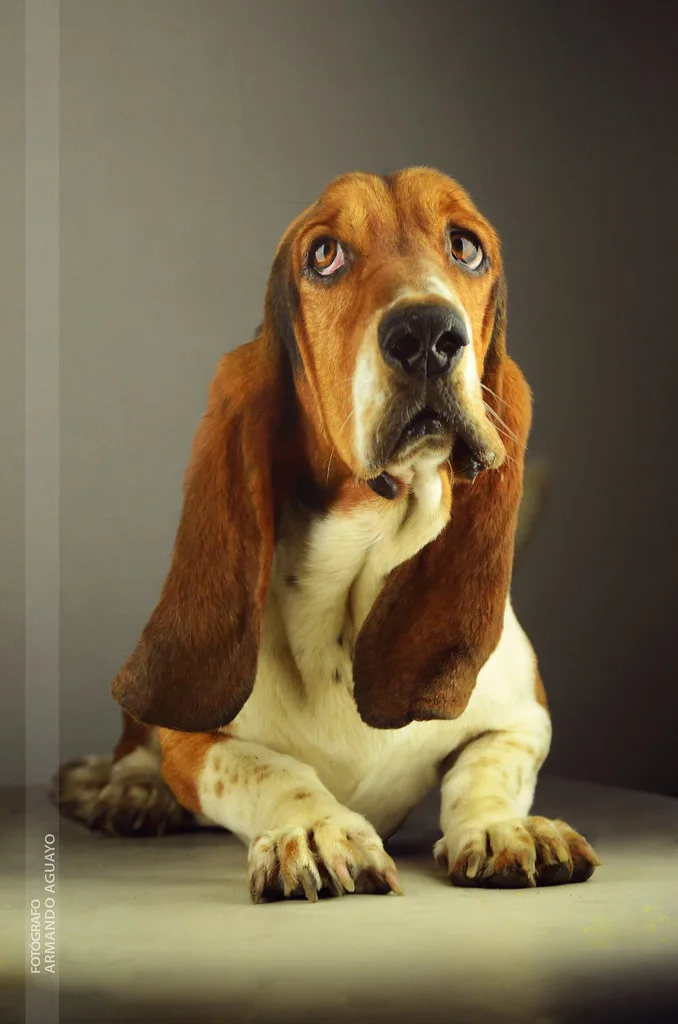
Figure: Basset Hound. Source: Armando Aguayo (ArmandoH2O), Flickr. License: CC BY 2.0. Changes: converted to WebP and width-limited only; no cropping of image content.
Name and history
“Basset” comes from the French adjective bas, meaning “low.” The AKC notes that Bassets were first developed in France and Belgium; monks at the Abbey of St. Hubert are generally credited with crossing older French hounds to produce a short-legged scent hound that could work slowly over rough ground while hunters followed on foot after rabbits and deer. Accurate, persistent on the trail, it became a favorite of French nobility for whom hunting was a way of life.[1]
A story often told in the United States is that after the Revolutionary War, the Marquis de Lafayette gave George Washington a pack of Bassets. The AKC writes this as “reportedly.” In 1935, the Basset Hound Club of America was founded.[1]
Spotting a Basset
The AKC describes a large, domed head; extremely long, velvet-soft ears; mournful eyes; and a wrinkled brow—like a “sad clown.”[1] The standard is specific about the ears: set low and far back; when drawn forward they far cover the tip of the nose; they hang in loose folds with ends that curl slightly inward.[1]
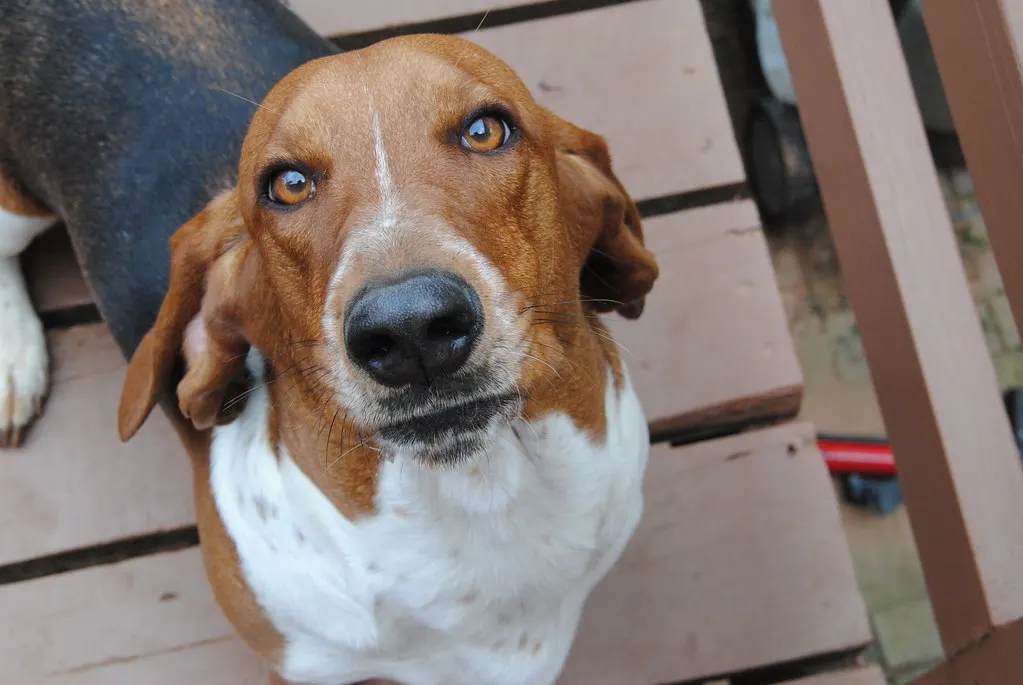
Figure: Basset Hound looking up at the camera, long ears and white chest clear. Part of another dog is visible at the upper left. Source: Bad Apple Photography, Flickr. License: CC BY 2.0. Changes: converted to WebP and width-limited only.
Legs are short and powerful, with heavy bone and wrinkled skin; the feet are large and thick. The standard says the distance from the deepest point of the chest to the ground must not be more than one-third the adult dog’s height at the withers, while still leaving enough clearance for free movement in the field. The tail is undocked, carried in a slight curve with the spine, and held high in hound fashion.[1]
Its build is for endurance, not speed, and the gait is deliberate and effortless. The AKC cites a common claim: among dogs, only the Bloodhound is more accurate on a scent trail.[1]
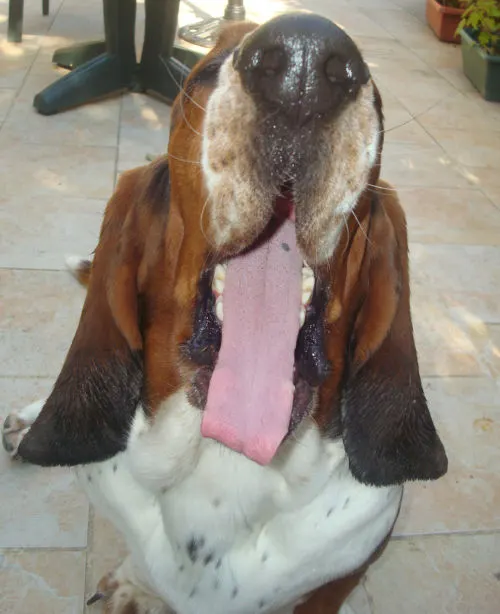
Figure: Basset Hound yawning, long ears hanging beside the face. Source: Eda, Wikimedia Commons. License: public domain. Changes: converted to WebP and width-limited only.

Temperament: easygoing at home, stubborn outdoors
The AKC’s description: gentle and agreeable at home; extremely stubborn once on a scent line; with a loud, deep bay. It may not be demonstratively affectionate, but its loyalty is constant. The breed standard calls for a mild temperament—neither aggressive nor timid.[1]
Walks: a daily outing, preferably with dog company
Bassets are not as active as some breeds, but they need regular, moderate exercise. The AKC finds that one moderate-paced walk a day is usually enough. Exercise helps keep them healthy and avoid packing on weight. They originally worked in packs with other hounds, so they often enjoy other dogs on outings and can play quite energetically; after a walk or play they usually settle into a comfortable nap.[1]
Leave room on walks for sniffing. The AKC notes that a Basset will gladly join you for long walks, investigating new scents along the way.[1]
Training: patience and treats
The AKC says Bassets are highly independent and challenging to train. For centuries these scent hounds were bred to hunt alone and stay on a trail without distraction, so a Basset may seem aloof and uninterested in your cues. It is fully trainable, but it takes time, consistency, and patience. Use treats and early socialization in puppyhood, and keep positive obedience work going into adulthood.[1]
Everyday care priorities
Ears. Long, pendulous ears get poor airflow; check often for infection. Frequent head shaking or ear scratching may mean a veterinary visit.[1]
Weight. Bassets tend to put on weight. The AKC warns to watch calories and weight, and not to overdo training treats, or obesity can follow.[1]
Coat care. The coat is short and smooth, but shedding can be heavy. Brush gently at least weekly with a soft brush or deshedding tool to manage loose hair; trim nails regularly, and bathe occasionally to keep the coat clean.[1]
Teeth. The AKC recommends brushing at least twice a week with dog toothpaste.[1]
Ask about health testing when choosing a dog
The AKC considers the Basset generally healthy, while listing issues that can appear: glaucoma, thrombopathia, von Willebrand disease, hypothyroidism, patellar luxation, hip dysplasia, and elbow dysplasia. Responsible breeders check hips, elbows, glaucoma, thyroid, clotting disorders, and patellas.[1]
AKC-listed Basset-related tests include eye exams and DNA tests for primary open-angle glaucoma (Basset type), thrombopathia (Basset type), mucopolysaccharidosis I, and Lafora disease.[1] When picking a puppy, ask the breeder to show parental results for these tests.
References
- American Kennel Club. Basset Hound. Accessed 2026-11-13.