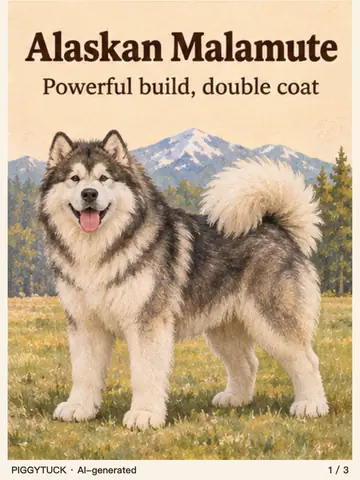
The Alaskan Malamute was bred to haul heavy loads in the Arctic. It has a well-furred plumed tail carried over the back, erect ears, and substantial bone; males about 25 inches and 85 pounds, females about 23 inches and 75 pounds, with a life expectancy around 10–14 years.[1] Almond-shaped brown eyes can look affectionate, yet heavy bone, deep chest, powerful shoulders, and a dense weatherproof coat all say working origins.[1] Household fit turns less on poster looks than on daily exercise, credible fencing, and steady leadership training.
Working background and recognition points
The Malamute is one of the oldest Arctic sled dogs; the name comes from the Mahlemiut (Mahlemut) Inuit people of Kotzebue Sound in northwestern Alaska. It is described as Alaska’s native arctic breed, a cousin to the Samoyed, Siberian Husky, and Eskimo dogs of Greenland and Labrador.[1] Some Malamutes were selected in 1933 to aid Admiral Richard Byrd’s Antarctic expedition.[1] Recognition points include spitz outline, erect ears, a plumed over-back tail, and heavy bone; they typically bark little but “talk” and howl, often triggered by sirens or boredom and loneliness.[1]
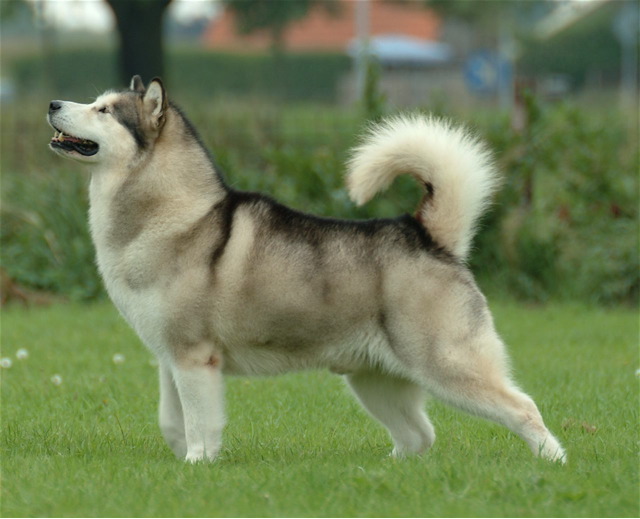
Figure: Alaskan Malamute standing on grass. SCMW, Wikimedia Commons[3]

Exercise, training, and household setup
Malamutes were bred to pull heavy loads over distance and need daily exercise. A well-fenced yard can help; hiking, running, and swimming with owners are common, and with time and interest they may do agility, obedience, weight pull, backpacking, recreational or competitive sledding, and skijoring.[1] Treating a freighting dog as a weekend-walk companion invites howling and destruction. They benefit from company and clear, consistent household rules.[1] A practical fit check is a weekly schedule of real exercise blocks—near-daily hard work, not occasional long walks when the weather feels nice. Without that calendar, a handsome plume will not save the household.
Socialization and obedience from puppyhood help prevent pushiness with children and other pets, or dominance over adults the dog does not respect. Mals are highly intelligent yet independent and willful, often stubborn; fairness and patience can yield a devoted companion.[1] Digging may be impossible to erase, so fencing must continue into the ground; friendliness toward strangers makes them poor guard dogs.[1] Give them an acceptable place to dig.[1]
Size and strength also shape household safety: leash manners and indoor calm must start in puppyhood to avoid dragging people later; time with children needs adult supervision because friendliness is not the same as never bowling someone over in play.[1] Choose food for the dog’s age and discuss home-prepared meals with a veterinarian. Account for reward treats in the daily allowance, as some dogs gain weight easily.[1] Fresh water should always be available. “Working dog appetite” is not a license for free-choice overfeeding.
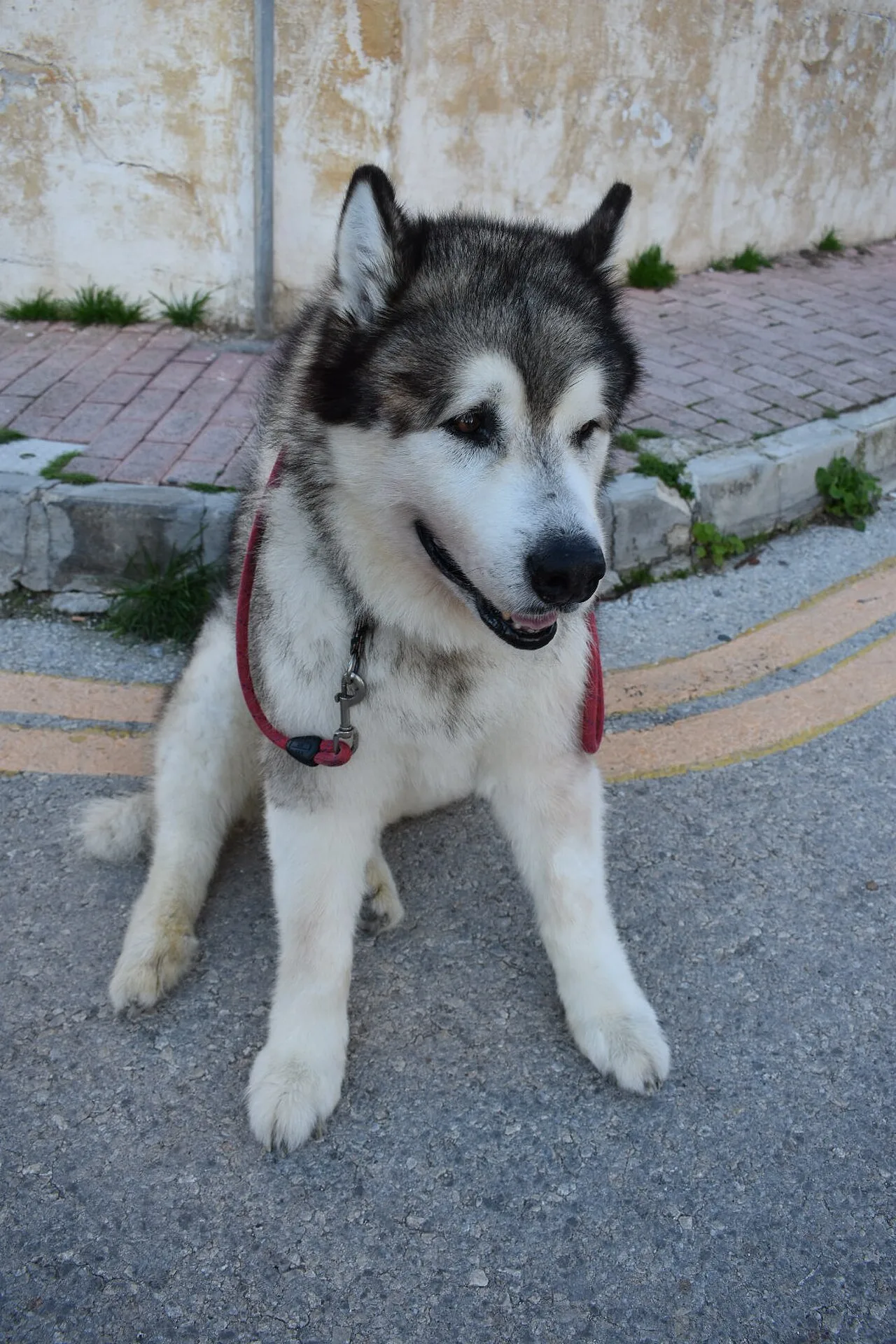
Figure: Malamute on asphalt with white mask and red leash. Continentaleurope, Wikimedia Commons

Coat care and health screening
The thick, waterproof double coat suits Arctic life but needs constant upkeep: brush daily with a pin brush and metal comb, checking for mats and irritated skin; add an undercoat rake twice a year in shed season; show dogs may be bathed weekly, pets about every six to eight weeks, with modest conditioner if the coat feels dry; trim nails regularly.[1] Expect noticeable seasonal shedding. People with dog allergies can gauge whether contact causes symptoms.[1]
A weatherproof double coat suits cold outdoor work, but warm humid homes need extra planning: exercise outside peak heat, offer shade and water, and do not treat the coat as permission for long confinement in a hot sealed space.[1] Seasonal sheds are heavy; accept cleaning costs. Grooming aims to limit mats and skin trouble, not to create a low-shed myth. If you can offer only short walks and sparse brushing, the freighting endurance and coat load become daily conflict rather than weekend charm.
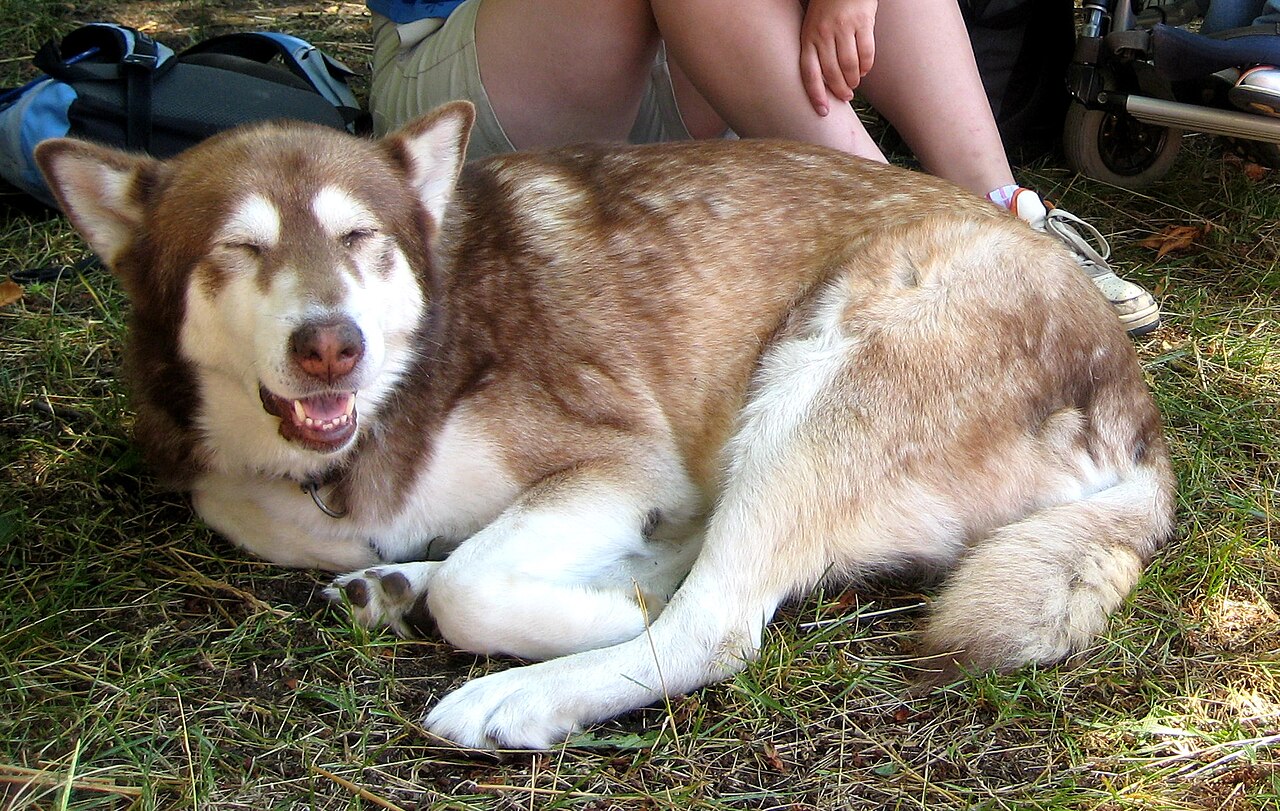
Figure: Red-brown Malamute resting on its side on grass. Dezidor, Wikimedia Commons

Responsible breeders screen for hip dysplasia (among the most common skeletal conditions in dogs), elbow dysplasia, thrombopathia, chondrodysplasia (“dwarfism”), hypothyroidism, inherited polyneuropathy, von Willebrand’s disease, and day blindness; the national club recommends hip evaluation, ophthalmologist evaluation, and an Alaskan Malamute polyneuropathy (AMPN) DNA test.[1] Ears and teeth need routine care too.[1] The Alaskan Malamute Club of America describes chondrodysplasia as a simple autosomal recessive: affected homozygotes show shortened, bowed forelimbs to varying degrees, while carriers look normal—so appearance cannot clear a carrier.[2] Screening guides purchase questions; it is not a diagnosis or health guarantee for one dog.[1][2]
If the working outline attracts you, first ask whether you can provide daily endurance exercise, fencing that goes into the ground, puppy-to-adult obedience leadership, and double-coat brushing with seasonal undercoat work—then put hip, eye, and AMPN records on the purchase list. Adjust exercise and training to the dog’s fitness and behaviour as you get to know it.
References
-
American Kennel Club. Alaskan Malamute. https://www.akc.org/dog-breeds/alaskan-malamute/
-
Alaskan Malamute Club of America. Chondrodysplasia. https://www.alaskanmalamute.org/chondrodysplasia
-
Wikimedia Commons. File:Alaskan Malamute.jpg. https://commons.wikimedia.org/wiki/File:Alaskan_Malamute.jpg