When a flock stopped to graze in the Caucasus Mountains, the Caucasian Shepherd Dog was still on duty. For centuries, people in the region relied on these dogs to guard livestock and homes against wolves and other predators. Many now live as companions, and the instinct to watch over their family and home endures. The American Kennel Club (AKC) has recorded the Caucasian Shepherd Dog in its Foundation Stock Service (FSS) since 1996.[1][2]
Start with the size of the adult dog. The AKC gives a height of 23 to 30 inches (about 58 to 76 cm) at the shoulder and a weight of 99 to 170 pounds (about 45 to 77 kg). Seen from the side, the body is slightly longer than the dog is tall at the shoulder. From the front, the chest is broad and deep, with plenty of space between the forelegs. The dog sitting upright against the graffiti wall gives you a clear view of both front paws and the white chest hair that falls between them. Picture a dog that size at your own gate. With one hand on the leash, would you have room to turn and walk back a few steps to let someone pass?[1][2]
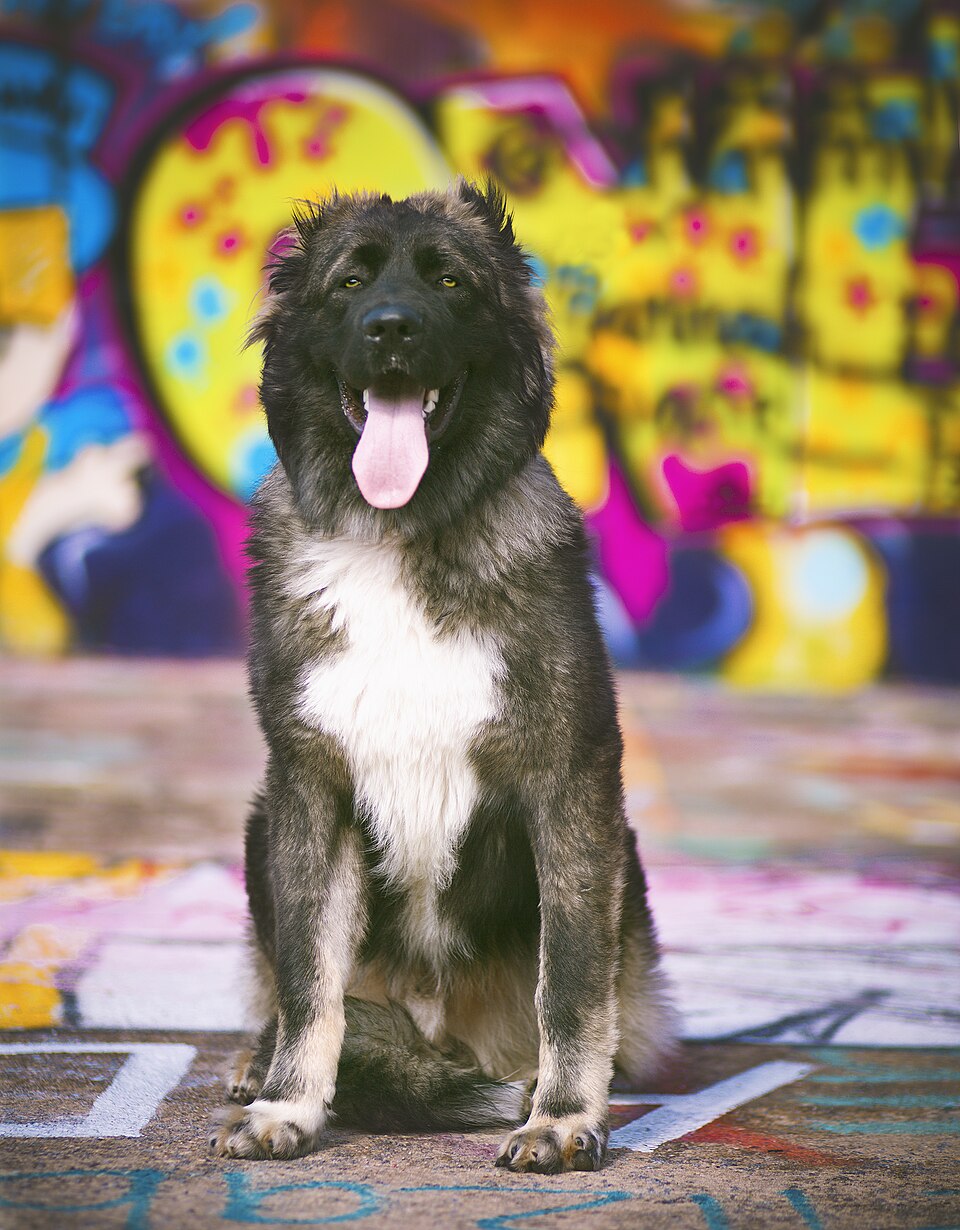
A seated Caucasian Shepherd Dog faces the camera. Reba Spike, Wikimedia Commons

To recognize the shape of the head, follow its outline from the cheeks toward the nose. The cheekbones are broad, and the muzzle is wide and deep, tapering gradually toward the nose. In the close-up from the dog show in Poznań, the short hair makes the outline of the muzzle easy to see, while the longer hair fans out at the cheeks. The coat can change the outline you see from one dog to the next. The AKC describes a heavier mountain type with a longer coat and a lighter steppe type with a shorter coat. A thick ruff is only one of the ways this breed can look.[1][2]
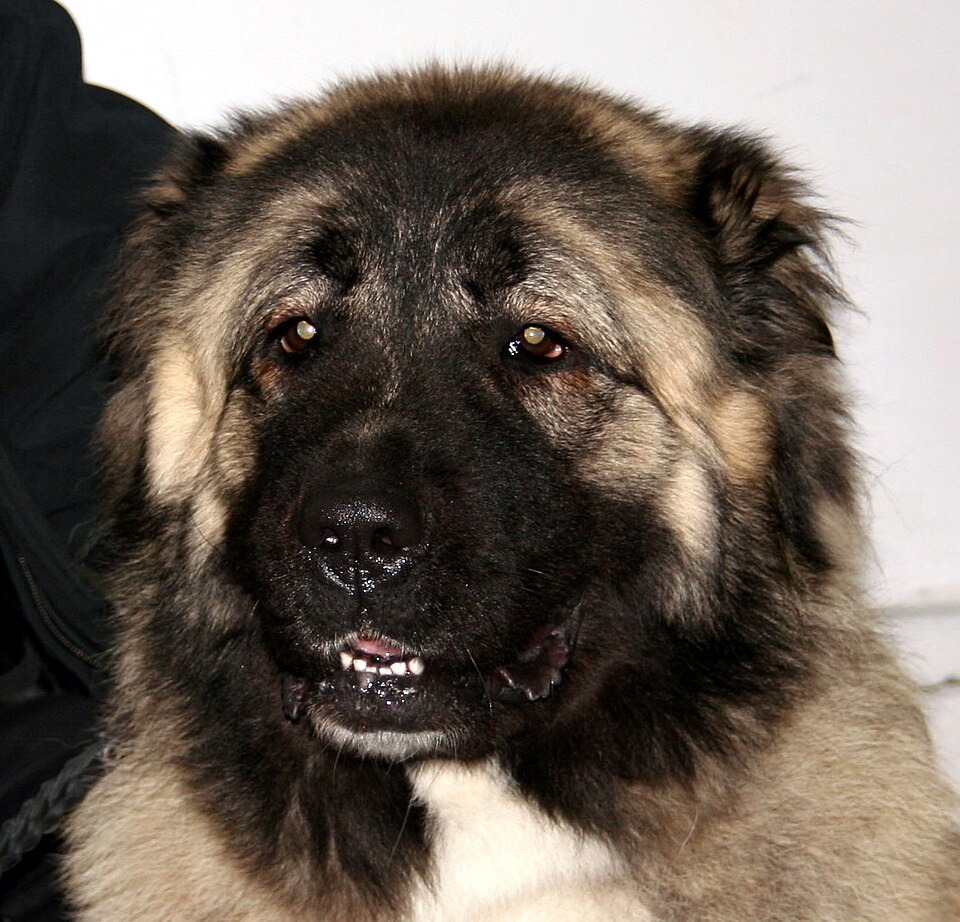
A close-up shows the dog's broad muzzle and cheeks. Pleple2000, Wikimedia Commons[5]

Daily walks beyond the gate
The AKC recommends both a spacious, fenced yard and a daily walk with someone from the household. The yard gives the dog room to move freely within a secure boundary. A walk takes you out together. A Caucasian Shepherd Dog may be quiet indoors and quite active outside, with the stamina for long walks and hikes. Start with a route you can manage on an ordinary day. Notice how readily your dog walks, how it carries itself along the way and how it seems once you get home. Those observations can guide how far you go next time.[1]
Walk through the gate routine as a family. Could a delivery driver push the gate open while the dog is loose in the yard? On the way out, can you clip on the leash before reaching for the latch? Coming home, can you latch the gate before taking the leash off? The answers tell you how well the fence works over the course of a day. If you share a hallway with neighbors, walk the route from your door to the street and look for tight corners where you would have little room to step aside for someone coming toward you.[1]
These dogs are intelligent and accustomed to making their own decisions. While your dog is young, use a quiet stretch of the yard to teach a simple walking routine. Keep moving while the leash hangs loose. When the dog pulls it taut, stop. Wait for the dog to come back beside you and the leash to slacken, then say “let’s go” and walk on. For a dog eager to explore, getting to move forward is itself a reward. Once this feels familiar in the yard, practice on a quiet stretch outside the gate. Ask everyone who takes a turn walking the dog to follow the same routine.[1][3]
A clear path for visitors
Now picture someone coming through that gate from the other side. A Caucasian Shepherd Dog can be affectionate with familiar people and intensely watchful when a stranger enters its home. Think about who comes by on a typical day. If friends let themselves in or people regularly cross the yard, the dog needs a comfortable place away from the entrance. Before a visitor arrives, one family member can settle the dog there and close the door between it and the entryway. Someone else can then welcome the visitor. Even a guest who needs a minute to get some luggage through the door has room to do so.[1][3]
Help the dog get used to its resting place when nobody is visiting. Step briefly to the other side of the door and return while the dog is still at ease. Gradually extend the time apart. At another quiet moment, practice getting the dog to look at the person holding the leash. Have a helper stand well back. Give your dog a cue and reward it for turning to look at you. If it keeps staring at the helper, move farther away and try again. On an ordinary visit, it is enough for everyone to get past the entrance calmly. The dog can carry on resting after the guest comes inside.[3]
Where to brush a long coat
Taking off the harness after a walk gives you a chance to look closely at the coat. In the photograph below, the hair on the side of the dog's face is short, while long strands fall from behind the ear along the neck. Caucasian Shepherd Dogs have a well-developed undercoat. Long-coated dogs also have feathering on the backs of their thighs. The AKC recommends daily brushing for long-coated dogs. Start somewhere your dog is comfortable being brushed, such as the shoulders or back. Then work around the sides of the neck, the chest and the backs of the hind legs. Those longer sections are easy to miss if you only run the brush over the back.[1][2]
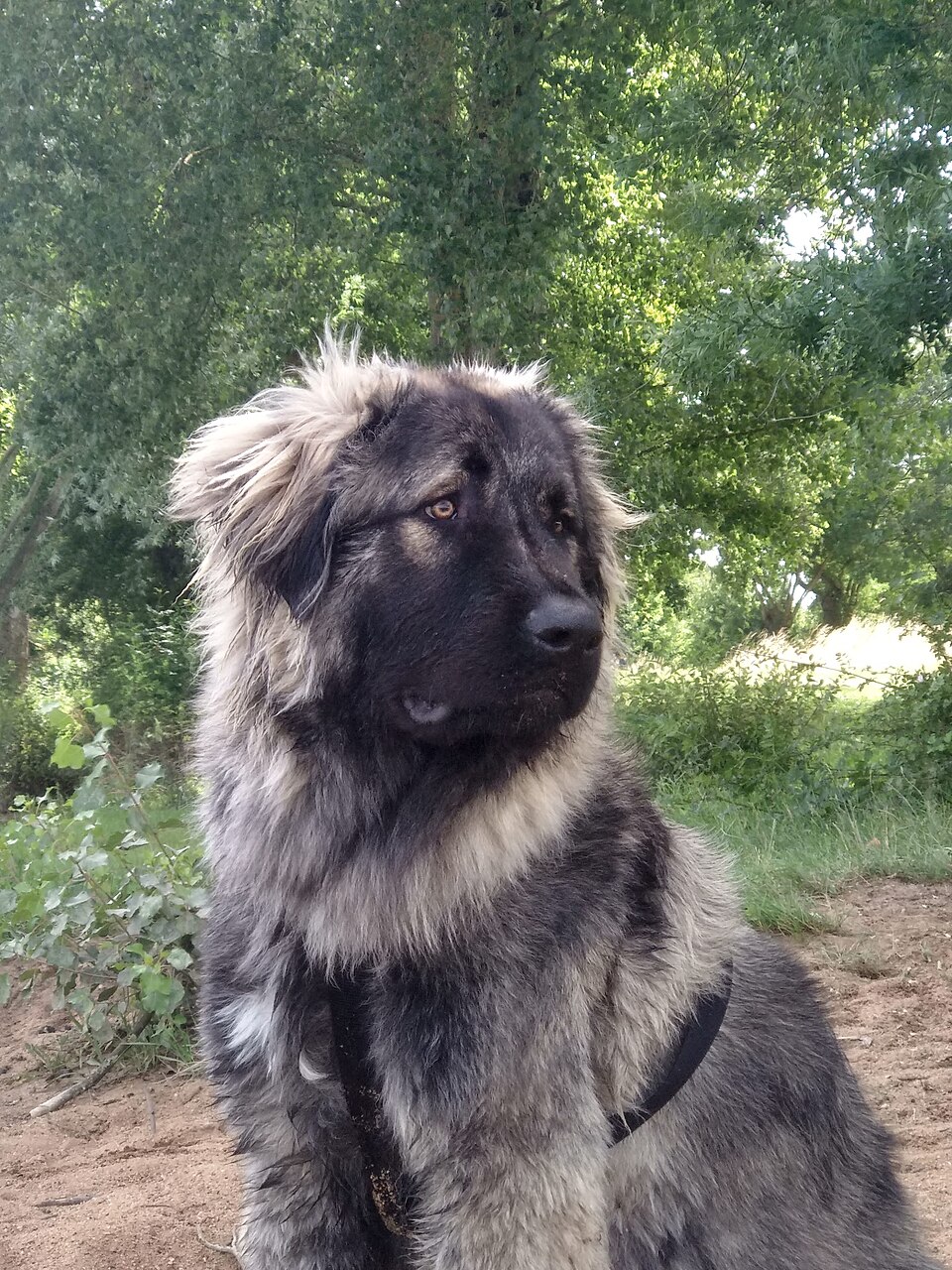
Long hair forms a ruff around the dog's neck. Zeshor, Wikimedia Commons[6]

Trimming an adult dog's nails is much easier if a dog this large is comfortable letting you hold a front paw. Start with a brief touch on the back and a small reward. As the dog relaxes, gradually lengthen the touch and work your way down to a leg and then a paw. The breed's strong nails grow quickly and need regular trimming to keep them from getting too long or splitting. Make time to brush the teeth and look inside the ears for a buildup of wax or debris. You can help your dog get used to each part of this routine separately, starting when it first comes home.[1][3]
Before bringing home a puppy, ask the breeder to go through both parents’ health records with you. Which dog was tested, what did the test look for, and how did the result inform the decision to pair these two dogs? The AKC explains that genetic testing can help breeders reduce the chance of passing on the conditions covered by those tests. For the puppy's day-to-day care, write down what it has been eating and when. That gives you and your veterinarian a starting point for discussing feeding as the puppy grows. Think back over an ordinary day at home. Who will handle that care, who will take the dog out each day, and who will settle it before a visitor comes through the gate? Specific answers will help you judge whether this large guardian fits your household.[1]
References
-
[1] American Kennel Club. Caucasian Shepherd Dog.
-
[2] Fédération Cynologique Internationale. FCI-Standard N° 328: KAVKAZSKAÏA OVTCHARKA (Caucasian Shepherd Dog). English edition, March 2, 2011.
-
[3] Stephanie Gibeault. Tips for Step-By-Step CGC Training at Home. American Kennel Club.
