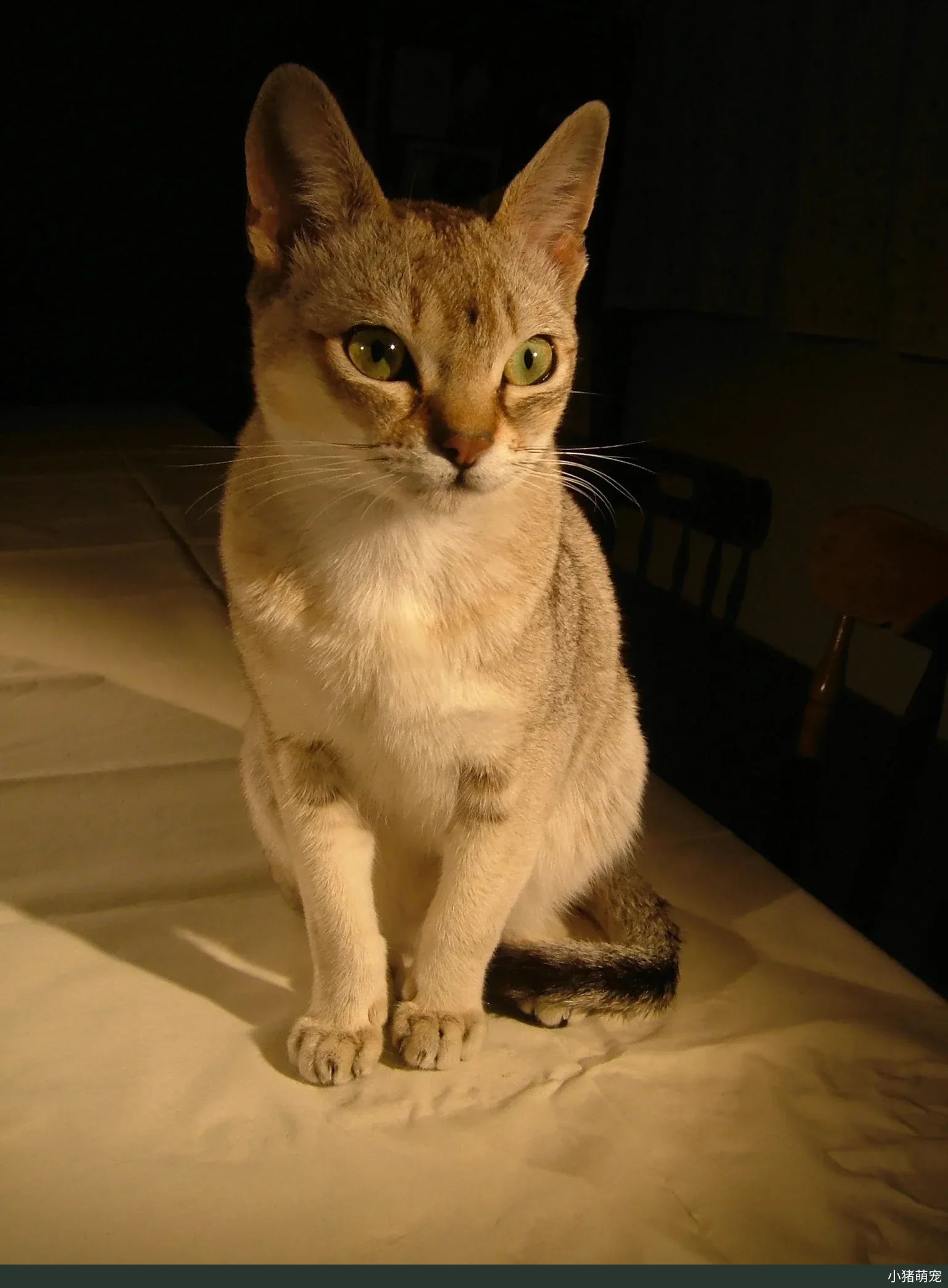
The Singapura has a face that invites a second look: large ears, large eyes, a small solid body, and a fine sepia-agouti short coat. It is not a quiet “ornament” for the lap. Breed associations describe it as curious and active, keen to join people’s daily life; and how it moved from Singapore into U.S. breeding programs is a history that cannot be summed up as “street cat becomes show cat.”
U.S. breeding and origin disputes
In 1975 Hal and Tommy Meadow returned from Singapore to the United States with five brown agouti cats and began breeding the variety. TICA’s current profile and a 2006 CFA history article also record that Hal had sent cats to the U.S. in 1971 for Tommy to breed, and that when the couple went to Singapore in 1974 they took three of those offspring with them. So “brought back from Singapore to the U.S. in 1975” does not by itself prove those foundation cats had lived only on local streets until then. TICA breed profile
Controversy sits right there. A 1996 CFA article notes that 1974 import papers used the same names as cats earlier described as found in Singapore; the matter went to CFA’s board in 1990. The 2006 article says the board found no grounds for misconduct and took no action. CFA still classifies the Singapura as a natural breed, but association classification is not the same as independent proof of full pedigree origin, and one should not turn the conjecture of a deliberate Burmese × Abyssinian cross into a settled fact. CFA history article, 1996; CFA history article, 2006
In 1980 breeder Barbara Gilbertson also brought in a queen named Chiko from the Singapore SPCA, adding another source line to early breeding. Those history pieces were written by breed authors and published by the association; they suit learning association records and the dispute’s course, not standing in for independent investigation.
Compact size and sepia-agouti short coat
Compact size is the Singapura’s hallmark, but the standard does not chase endless miniaturization. CFA’s official standard describes a small to medium, muscular cat whose ears and eyes look large relative to the head; TICA’s standard overview also stresses a compact body. Looking refined does not mean the body should be frail. CFA official standard; TICA standard overview
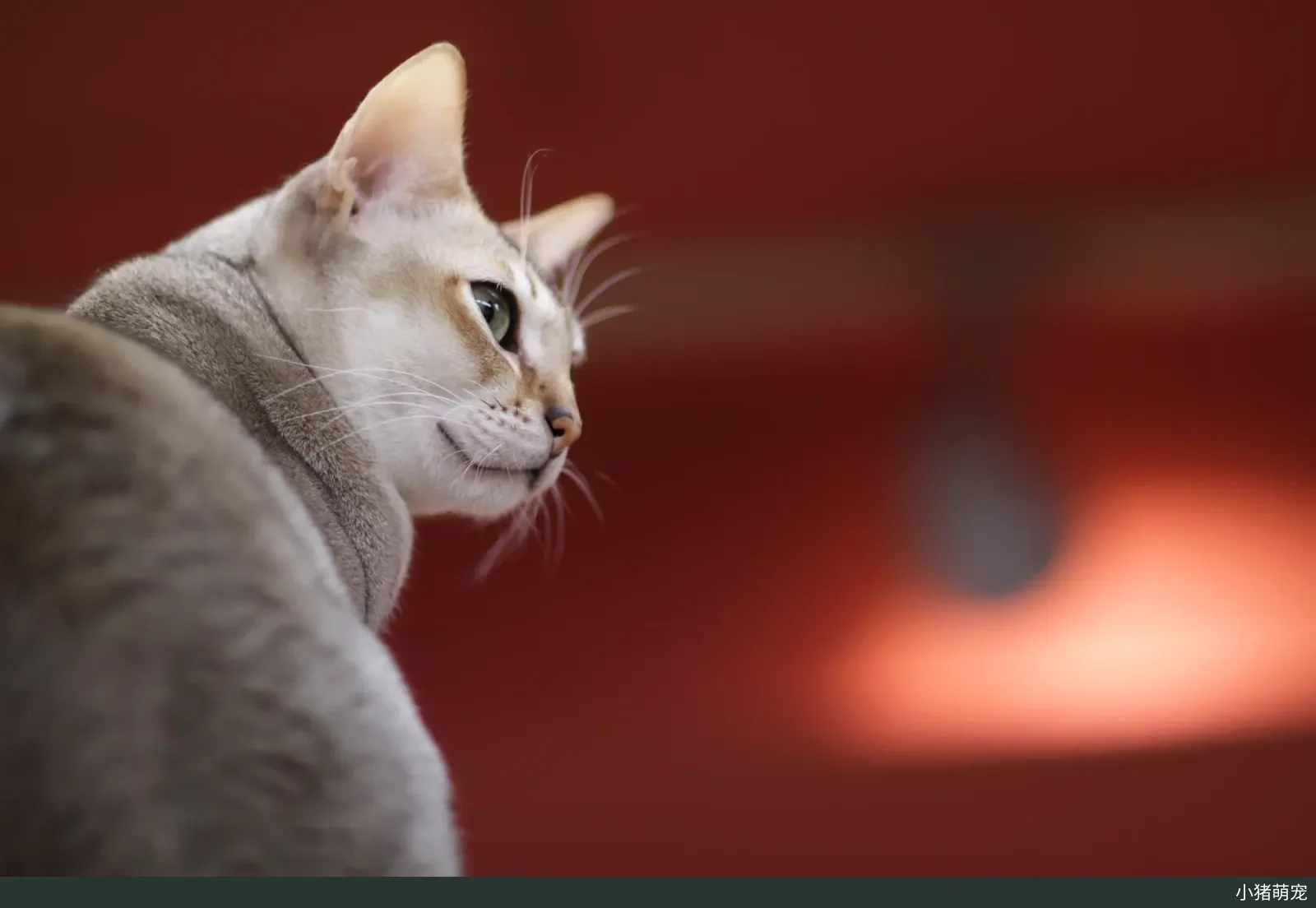
Another marker is the short, fine, close-lying coat. CFA accepts only sepia agouti: warm old-ivory ground with dark brown ticking, each hair with at least two dark bands separated by lighter bands and a dark tip. What is often called agouti ticking is this banding on single hairs, so from a distance the look is a fine soft sheen rather than bold stripes. Barring may appear on the inner forelegs and behind the knees. Color and type help recognize the breed but cannot replace traceable identity records. CFA coat and color standard
Temperament and living together
CFA and TICA breed profiles both list curiosity, playfulness, and people-orientation as common traits. A Singapura may want your shoulder or may be busy inspecting cabinets and high places. For interactive households that involvement is charming; if you want a cat content for long stretches alone, rethink the living plan. Breed descriptions only show tendencies; boldness, activity, and social preference still vary cat to cat. CFA temperament; TICA temperament
Day to day, provide sturdy climbing and resting spots, answer exploration with wand play, and secure cabinet spaces that invite getting stuck. With children, dogs, or other cats, gradual introductions and room to retreat beat assuming “this breed always gets along.”
Coat care is relatively easy. CFA suggests weekly combing to remove dead hair and as shared time; baths are usually unnecessary. Small size does not mean feeding by feel alone—diet and weight management should follow the individual and veterinary advice.
Genetic screening and health notes
When choosing or adopting a Singapura, ask specifically about pyruvate kinase deficiency (PK-Def) testing. UC Davis Veterinary Genetics Laboratory lists Singapuras among breeds suited to the test: the disease is autosomal recessive; low enzyme activity makes red cells unstable and lost, causing hemolytic anemia. Anemia may be intermittent; age of onset and severity vary, with possible marked lethargy, weakness, weight loss, or jaundice. UC Davis feline PK deficiency
Per that lab’s result guide, N/N means the variant was not detected; N/K is a carrier that usually does not become ill from this recessive trait but can pass it on; K/K is affected, and the test cannot predict severity. Two carriers mated give each offspring a 25% chance of being affected—not a guarantee of one in four in every litter.
Do not settle for “the parents were DNA-tested”: ask for formal reports tied to the individual cat’s identity and have a veterinarian explain them. Negative for this variant does not rule out all inherited disease or later health problems; if the signs above appear, seek veterinary assessment rather than judging from breed and appearance alone.
References
- CFA: Singapura (official breed standard, temperament, and grooming)
- TICA: Singapura (breed profile, standard overview, and history)
- CFA: Singapura Article 1996, Cathie McHenry, originally in The Cat Fanciers’ Almanac, March 1996; breed-author historical narrative.
- CFA: Singapura Article 2006, labeled by the association as a 2006 article; breed-author historical narrative.
- UC Davis Veterinary Genetics Laboratory: feline erythrocyte pyruvate kinase deficiency
Source pages were checked on 2026-10-19; aside from the two history articles, cited pages carry no publication date. CFA’s current overview and the 2006 history disagree on registration years; this article does not pick a single year from that conflict.
Image credit and licenses
- Lead image Raffles singapura cat: Liz Upton (Squeezeweasel), Wikimedia Commons original page, CC BY-SA 2.5.
- Body image Singapura cat looking around: Takashi Hososhima, Wikimedia Commons original page, CC BY-SA 2.0.

