The Belgian Malinois takes its name from Malines, the Belgian city where the breed developed. Local shepherds and cattle farmers chose dogs for the work they could do around livestock. A herding dog had to keep track of animals moving in different directions and be ready to change course at the shepherd’s cue. Both abilities matter in a family dog. A Malinois has the stamina to keep someone company on a long hike, and a flash of movement can catch its eye in an instant. Picture an ordinary workday. Who has time to start something with the dog, guide it through a turn, and bring the activity to a close? [1]
Take a few steps back to see the whole dog. In profile, a standing Malinois has a nearly square outline, well-defined muscles, and a head held high. The American Kennel Club (AKC) gives a height of 22 to 26 inches, measured from the ground to the top of the shoulders. Up close, look for a short coat ranging from fawn to mahogany, a black mask, and upright black ears. A Malinois can resemble a German Shepherd at first glance. Look again at the proportions and you can see the Malinois’s leggier, finer-boned build and different head shape. [1]
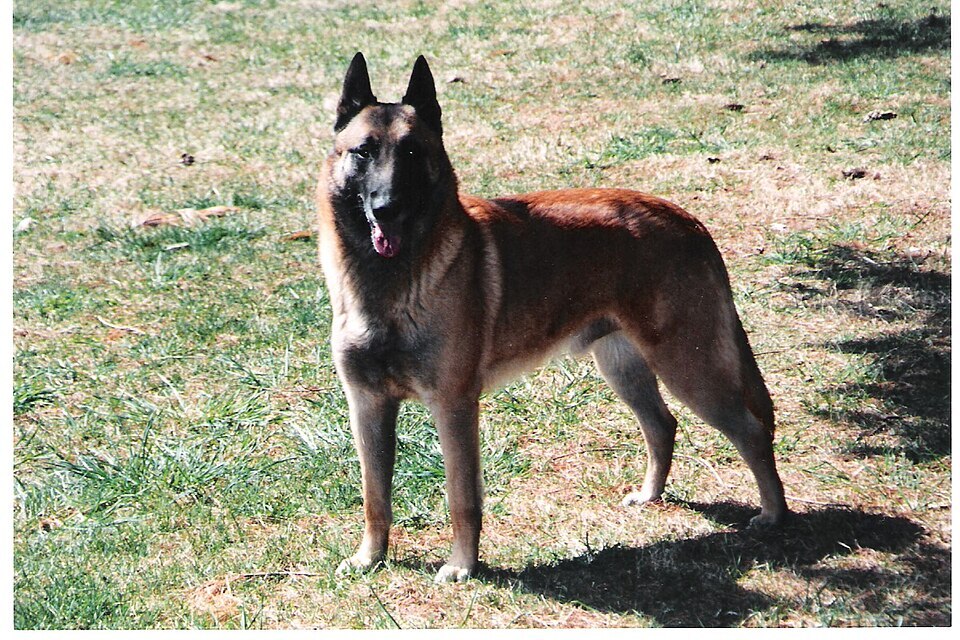
Figure: A Belgian Malinois in profile. Flickr user intrepidmalinois "MALINUTS", Wikimedia Commons[2]

Morning and evening walks give a dog a chance to stretch its legs and relieve itself. A fenced yard gives it room to move. A Malinois also needs stretches of the day when someone gives it their full attention. The AKC lists hiking, agility, and obedience among the activities the breed enjoys. Each gives the dog and its partner something to do together. If your family loves a weekend hike, consider the weekday version. On the walk down the block, can you put your phone away, notice where the dog is looking, and help it find the next turn? [1]
A single tree can give a walk some shape. In a familiar open space, let the dog sniff. When it can turn its attention to you, use a cue it knows and walk around the tree together. Back where you started, pause, acknowledge the dog, and give it slack in the leash to sniff again. You get to see which part it follows easily and where a simpler turn might help. The photograph of a dog weaving through poles catches one such change of direction. On a family walk, one turn together can be enough before you both move on. [1]
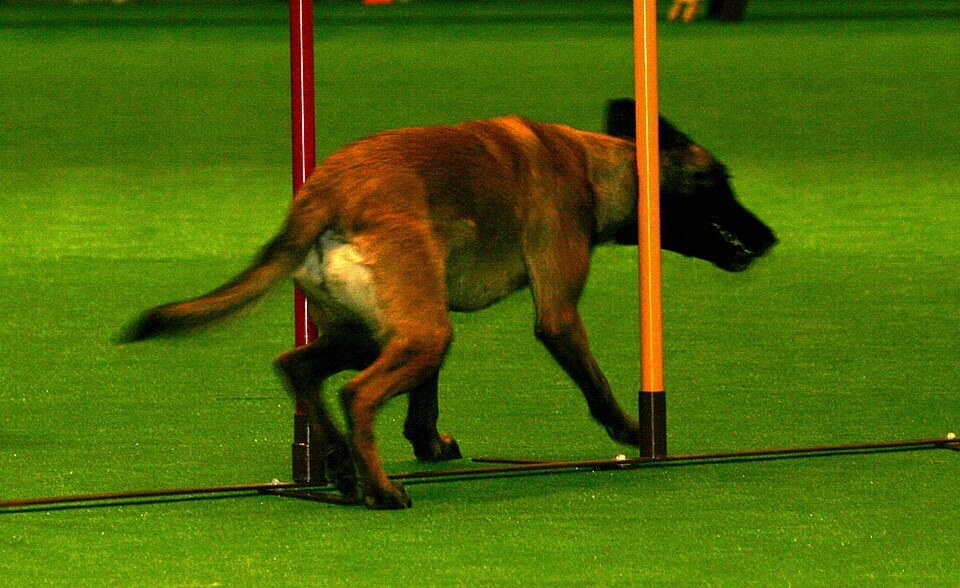
Figure: A turn through the weave poles. user:Przykuta, Wikimedia Commons[3]

A child running across the living room or a cyclist passing on a path can be a harder test. Many Malinois notice fast movement immediately, and some will follow it. Early socialization and basic obedience practice can begin with everyday encounters like these. Choose a place with room to step away. An adult can hold the leash at a distance where the dog can see the movement and still turn back at a familiar cue. If the dog fixes its gaze and struggles to turn away, give it more distance. At home, adults can arrange separate areas so children are free to play while someone else works with the dog. [1]
Family members who take turns playing with the dog can agree on how a game ends. Use the same closing cue, put the toy away, offer water, and let the dog go somewhere it can stretch out. Choose a spot away from the front door and the route children take through the house. Try walking that route yourself as though you had just come home together. Where can you take off the leash at ease? Where is the water? When the house is at its busiest, can the dog stay lying down while people get up and pass by? [1]
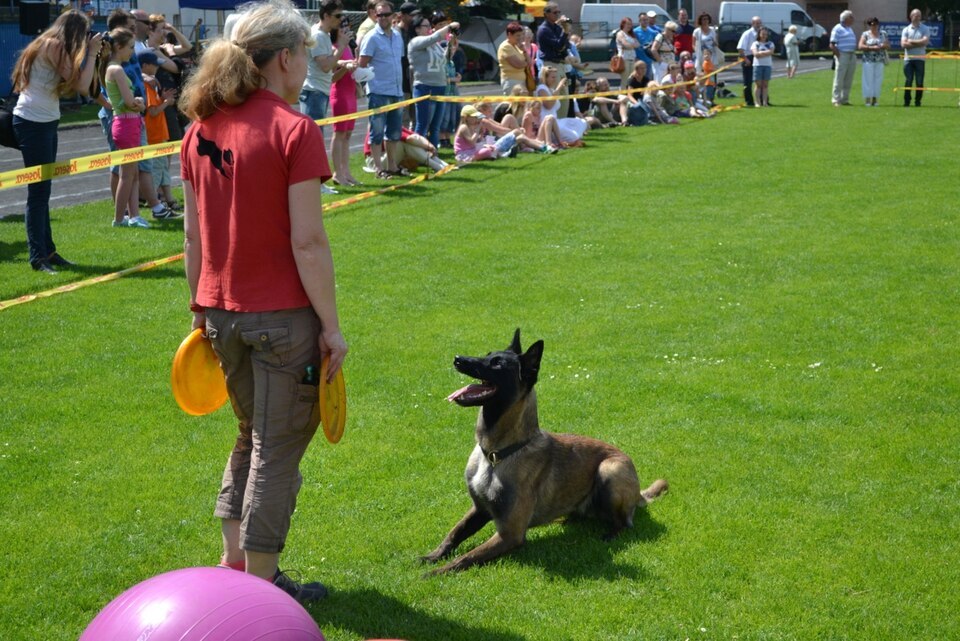
Figure: A Malinois seated facing its partner. Silar, Wikimedia Commons[4]

Test your plans against the busiest day of the week. If the usual walker works late, does the person taking over know the same cues and what tends to catch the dog’s eye? Does the weekend runner have time on a Tuesday to slow down and do something with the dog? Individual dogs differ in what interests them and how long they can concentrate. When you meet a particular Malinois, ask to walk alongside someone it knows. Notice what draws it in, when it turns to follow, and how it settles afterward. Those details can help you decide who could take which outings. [1]
Quiet periods are a good time to care for the Malinois’s short, waterproof coat. An occasional pass with a medium-bristle brush or rubber grooming mitt lifts loose hair and distributes skin oils through the coat. The AKC describes two shedding periods a year, when a daily pass with a slicker brush helps remove loose hair. As you put the brush away, take a look at the dog’s nails, too. Overgrown nails can make walking and running painful. A family planning regular outings with a Malinois will want to make room for regular nail trims as well. [1]
If you are talking to a breeder about a litter, ask to see the parents’ hip, elbow, and eye screening records. The AKC identifies hip and elbow dysplasia and certain eye conditions as concerns breeders screen for. Each result describes the parent examined at the time of the assessment. A puppy’s own health and how it will develop are separate questions. Once the dog comes home, frequent toothbrushing and regular ear checks for signs of infection are part of its care. Count those quiet minutes alongside the walks and games when you consider how a Malinois would fit into your day. [1]
References
-
[1] American Kennel Club. Belgian Malinois Dog Breed Information.
-
[3] File:Agility 088.jpg.